

High Quality Cassava Flour: Key Specifications and Quality Indicators Explained
As global demand for gluten-free foods continues to rise, the market for High Quality Cassava Flour (HQCF) is growing rapidly—along with increasingly strict quality requirements. If you plan to produce or purchase true High Quality Cassava Flour, knowing the name alone is not enough. From appearance to internal specifications, High Quality Cassava Flour must meet a rigorous set of standards.
In this article, Jinrui Foodtech will break down the 5 most important quality indicators of High Quality Cassava Flour, and show you how the right cassava flour processing equipment and production process can help you consistently produce HQCF that meets all the standards.
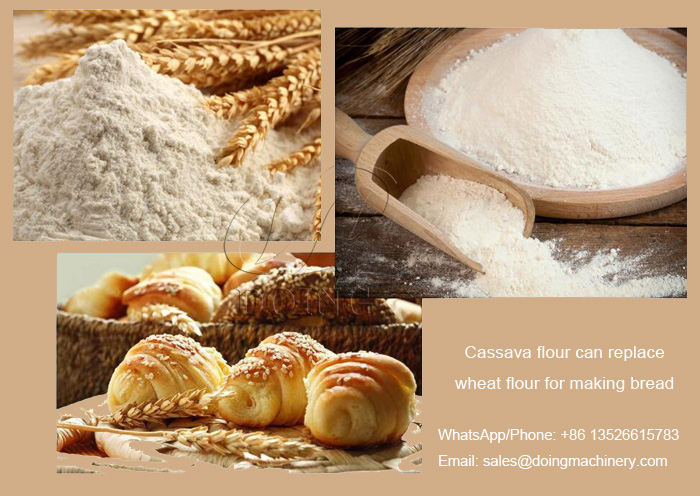 High quality cassava flour
What is High Quality Cassava Flour?
High Quality Cassava Flour is a fine powder made from fresh cassava roots through a series of processes: cleaning, peeling, crushing, dewatering, drying, and fine sieving. A good High Quality Cassava Flour appears white or slightly off-white, with a smooth, fine texture. It has no odor, no lumps, and a long shelf life.
In the food industry, High Quality Cassava Flour is widely used for gluten-free baking, puffed snacks, sauce thickening, and industrial fermentation. On the international market, only cassava flour that strictly meets specific quality standards can be called HQCF. So, what exactly are those “strict” indicators? Let’s find out below.
Next, we’ll cover the 5 core quality indicators: fineness, ash content, viscosity, moisture content, and starch content.
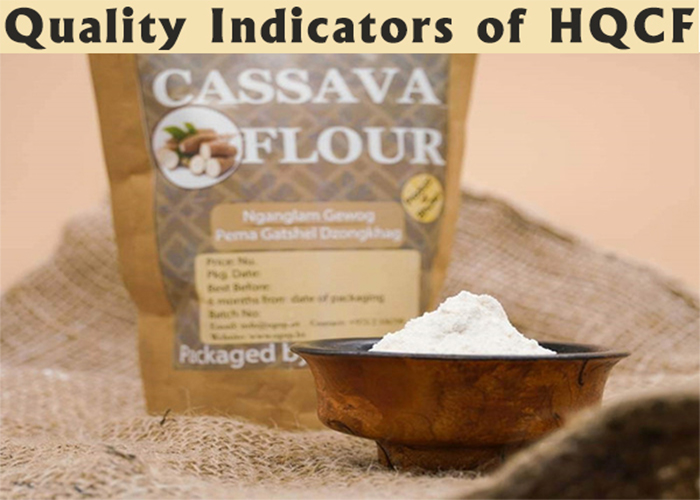 Quality indicators of HQCF
The 5 Core Quality Indicators of High Quality Cassava Flour
Quality Indicator 1: Fineness
Powder fineness directly affects the taste and processing performance of cassava flour. For standard High Quality Cassava Flour (HQCF), fineness typically ranges from 60 to 200 mesh. According to ISO and industry standards, no less than 95% must pass through a 60-mesh sieve. For premium products, you’d better reach 100 mesh or above.
So, how can you ensure your High Quality Cassava Flour consistently meets this fineness standard? Simple – equip your production line with a multi-stage sieving system. Take Jinrui Foodtech’s Sifter for example: it comes with 10 built-in screen decks, allows free mesh adjustment, and achieves a screening efficiency of over 98%. This way, every batch of High Quality Cassava Flour comes out with consistent fineness – no more “some coarse, some fine” problems.
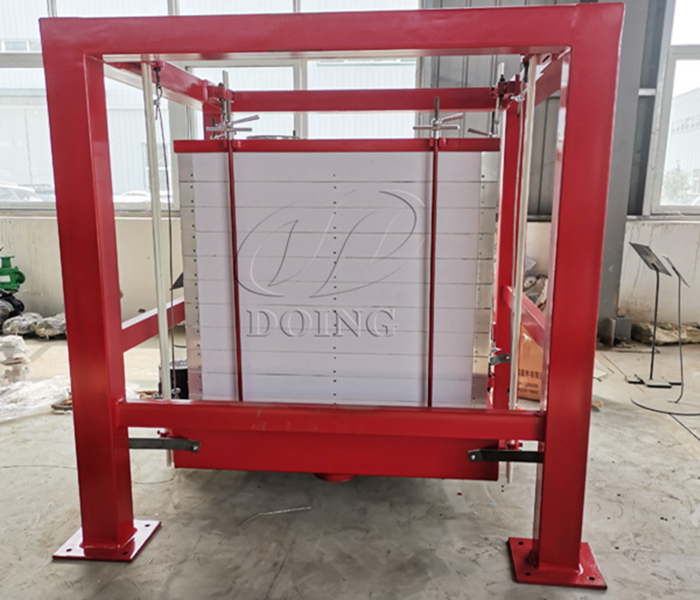 Sifter for cassava flour production
Quality Indicator 2: Ash Content
Ash content reflects the amount of sand, skin, and impurities in cassava flour. It directly affects whiteness and mouthfeel. For High Quality Cassava Flour, total ash must not exceed 3%, and sulfated ash must not exceed 0.5%. High ash means too many impurities – either the roots weren’t cleaned well, or the peeling was incomplete. Such cassava flour won’t be accepted by food manufacturers, let alone exported.
How to reduce ash content? Start at the source. Choose the right washing and peeling equipment. For example, the paddle washer and peeler on Jinrui Foodtech’s cassava flour production line achieve a removal rate of over 99% for sand and skin. This way, ash content is easily kept within HQCF standards.
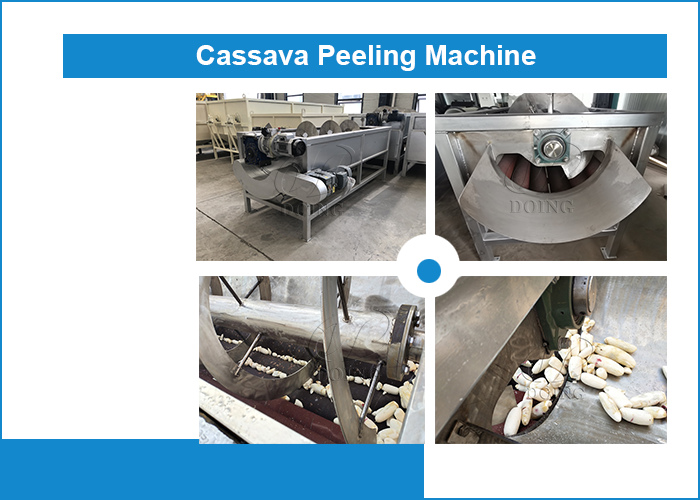 Peeler in cassava flour line
Quality Indicator 3: Viscosity
Viscosity determines how cassava flour performs as a thickener, in baking, or for thickening sauces. Standard High Quality Cassava Flour requires stable peak viscosity, a pasting temperature below 75°C, and low setback. If viscosity is unstable, sauces will thin out or separate – customers using your cassava flour will be dissatisfied.
The key to preserving viscosity is to avoid damaging the starch during the drying process. Jinrui Foodtech’s low-temperature pulse flash dryer offers precise temperature control and short material retention time, achieving efficient drying without destroying the natural starch structure of cassava flour.
Quality Indicator 4: Moisture Content
Moisture content directly determines how long High Quality Cassava Flour can be stored. The international standard sets the maximum moisture content for High Quality Cassava Flour at 13%, but for long-term storage or export to distant markets, it is best kept at 12% or below.
The key to controlling moisture content lies in two stages: dewatering and drying. Jinrui Foodtech’s plate-and-frame filter press reduces the moisture content of dewatered cassava flour to around 38%. Then the flash dryer quickly brings the final moisture content down to 10%–12%. This range fully meets the strict standards for High Quality Cassava Flour.
Quality Indicator 5: Starch Content
Starch is the soul of High Quality Cassava Flour. Standard High Quality Cassava Flour should have a starch content between 65% and 70%. The higher the starch content, the better the thickening, fermentation, and binding properties of your High Quality Cassava Flour.
So, how do you increase the starch content of High Quality Cassava Flour? The key lies in the grinding stage. Jinrui Foodtech’s processing equipment uses a two-stage crushing process, achieving a cassava crushing rate of over 94% – fully releasing the starch.
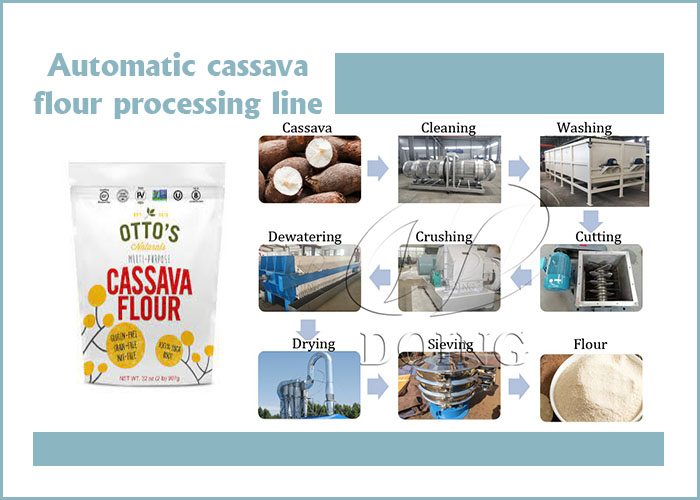 HQCF processing machine
(Recommended Reading: How much is one ton cassava? Why it is profitable to invest in cassava flour processing business?)
How to Process High Quality Cassava Flour
Now that we understand the five quality indicators of High Quality Cassava Flour, the key to achieving High Quality Cassava Flour production lies in choosing a complete and reliable processing line. Below is the High Quality Cassava Flour production line solution provided by Jinrui Foodtech:
Paddle washer + peeler: removes over 99% of sand and skin → lowers ash content.
Two-stage grinderl: crushing rate over 94% → releases more starch.
Plate-and-frame filter press: reduces moisture to approximately 38% → prepares for drying.
Low-temperature pulse flash dryer: final moisture content 10-12%, protects starch → keeps viscosity stable.
Multi-layer sifter (10 decks, screening efficiency over 98%): ensures fineness of 60-200 mesh.
Automatic packing machine: ready for storage or export.
Producing High Quality Cassava Flour that meets strict quality standards for fineness, ash content, viscosity, moisture content, and starch content. With Jinrui Foodtech’s complete cassava flour processing line – from washing and peeling to drying, sieving, and packaging – you can consistently turn out High Quality Cassava Flour that satisfies international buyers and food manufacturers.
Ready to build or upgrade your High Quality Cassava Flour production line? Contact Jinrui Foodtech today for a tailored solution and free quote.