

Why Your Cassava Starch Yield Is Low — It Starts at Rasping
If your cassava starch plant is running at a reasonable capacity but the output numbers still do not add up, the problem may not be where you expect.You have checked the raw material. Reviewed the extraction line. Examined the drying stage. Everything seems fine. Yet the yield stays below target.The culprit is often the rasping stage — the very first step in the processing line. When that step falls short, starch is lost in the fiber before extraction ever begins. And unlike most other stages, what is lost at rasping cannot be recovered later.
This article explains why rasping determines your yield, how to diagnose whether it is the problem, how to distinguish rasping issues from other bottlenecks, when to consider upgrading, and what the right equipment can change.
Rasping grinds or shreds cleaned cassava roots into a fine pulp. Its single job is to break open the plant cells so that the starch inside can be washed out in the next stage. It sounds simple. But this stage is where most plants leave money on the table.
The principle is straightforward: the finer and more uniform the rasping, the more completely the cell walls are broken, and the more starch is released. If the rasps are coarse or inconsistent, a large number of cells stay intact. The starch inside them is carried away with the fiber waste — permanently.
The numbers make this concrete. A cassava root contains roughly 25–30% starch on a dry weight basis. In a well-operated starch plant, 85–90% of that available starch can be recovered. In a plant with an underperforming rasping stage, that recovery rate can drop to 75–80% or lower.
On a plant processing 100 tons of cassava per day, a 10% difference in recovery rate represents several tons of starch lost every single day. Over a year, that is a substantial and entirely preventable loss of revenue.
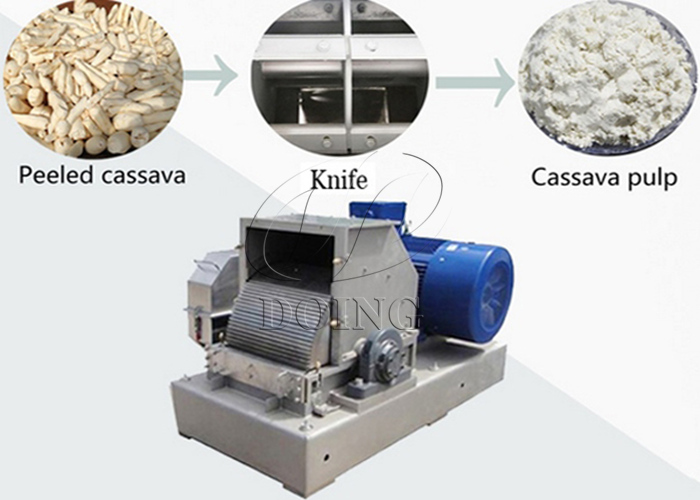 Henan Jinrui cassava rasping machine
Before you invest in anything, confirm that rasping is actually the problem. Here are three practical indicators that point directly to the rasping stage.
Sign 1: The Fiber Residue Looks White or Creamy
After extraction, the dewatered fiber should be gray or dark in color — most of the starch has been washed out. If the fiber still looks light, pale, or creamy, that color is starch. It is a strong signal that the cells were not broken open well enough and the starch never got released in the first place.
Sign 2: Your Measured Yield Falls Short of the Expected Range
For fresh cassava with 25–30% starch content, a well-run plant should achieve 85–90% recovery. If your plant is consistently below 80%, or if you are recovering noticeably less starch than similar operations running comparable raw material, the rasping stage is the logical place to look.
Sign 3: The Rasping Machine Shows Uneven Output or Excessive Vibration
Uneven pulp texture, visible chunks in the rasped output, or abnormal vibration during operation all suggest that the machine is not performing consistently. When rasping quality fluctuates, yield fluctuates with it.
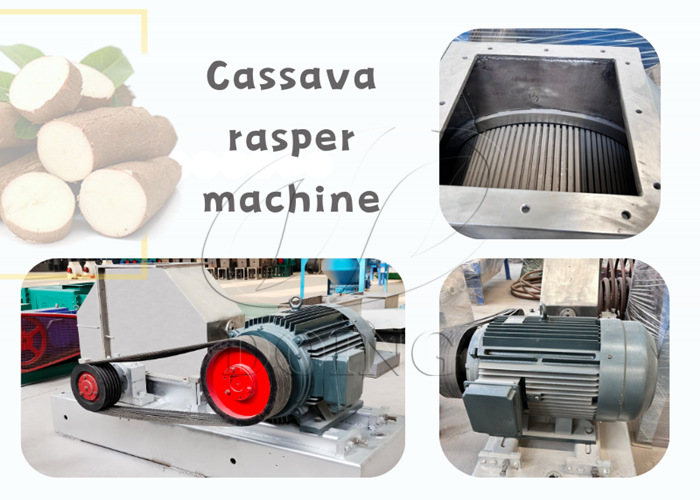 The rasper machine for cassava starch extraction
Here is the most important diagnostic distinction: low yield can come from multiple stages, and treating the wrong one wastes money. Use this guide to narrow down the actual bottleneck.
| Symptom | Most Likely Cause | What to Check |
| Fiber looks white/creamy after extraction | Rasping stage — cells not broken open | Inspect rasped pulp texture; check blade condition |
| Fiber is dark but yield is still low | Hydrocyclone / washing stage — insufficient starch separation | Check number of washing stages; verify water flow rate |
| Starch purity is fine but recovery is low | Rasping — starch locked in fiber | Fiber residue color + pulp texture test |
| Dryer output inconsistent or clumped | Drying stage — moisture uneven | Check inlet temperature and airflow uniformity |
| Good recovery but final quality poor | Refining / drying stage | Ash content, moisture, color testing |
If two or more of the rasping signs above appear simultaneously, rasping is almost certainly the limiting factor.
Rasping machines, like all processing equipment, have a practical lifespan. The decision to upgrade is not about age — it is about whether the machine is still doing its job.
Consider upgrading when:
The rasped pulp consistently contains visible fiber chunks or coarse pieces
The fiber residue still carries visible starch after extraction
The machine requires frequent blade changes or generates unusual vibration
The recovery rate has not improved despite attention to other stages
If two or more of these apply simultaneously, the machine is the limiting factor. Upgrading will show up in your output.
On the economics: a better rasping machine represents a focused equipment investment — not a full line overhaul. A 5–8% gain in recovery rate can pay back that investment within the first year at most processing scales. For larger plants, the payback period is often shorter.
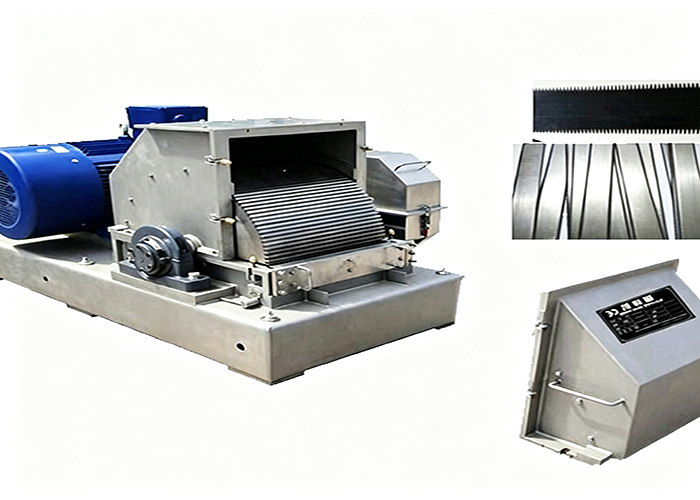 The automatic Tapioca rasper
Not all rasping machines are built to the same standard. Here is what separates a machine that protects your yield from one that quietly erodes it.
Fine and Consistent Particle Size
The rasped pulp should be fine, uniform, and free of coarse chunks throughout continuous operation. A machine that maintains consistent fineness delivers a consistent recovery rate — which means your output is predictable, not variable.
Energy Efficiency
Rasping is one of the more energy-intensive stages in the starch line. A machine that achieves good fineness without disproportionate power consumption reduces the cost per ton of finished starch.
Durable Wearing Parts
The rasping drum and blades are subject to constant abrasion. Machines with long-lasting wearing parts mean fewer shutdowns for maintenance, lower replacement part costs, and more consistent performance between service intervals.
Reliable Continuous Operation
A rasping machine that clogs, stalls, or loses fineness under continuous load creates instability across the entire line. A machine designed for uninterrupted operation keeps the downstream stages running predictably.
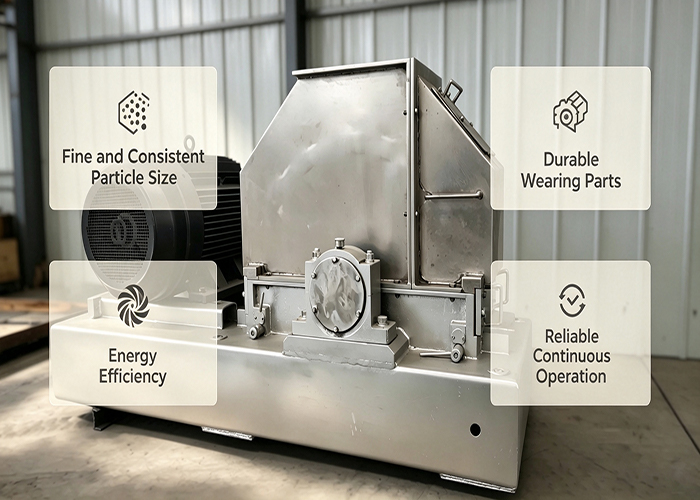 The better rasping machine
Q1: Does the rasping machine need to be matched to specific cassava varieties?
A1: Different varieties vary in fiber content and hardness, which affects rasping performance. A well-designed machine handles a range of raw materials, but parameters like drum speed and blade configuration may need adjustment. Henan Jinrui helps you configure the machine for your specific material.
Q2: Can the rasping machine be integrated into an existing starch production line?
A2: Yes. Henan Jinrui rasping machines can be sized and configured to match your existing line capacity and layout. During the quotation stage, we assess compatibility and identify any adjustments needed — such as feed conveyor connection, motor sizing, and control system integration. If your current rasping stage has a capacity gap, replacing or adding a properly sized unit is typically a straightforward integration.
Q3: What happens to the fiber residue after starch extraction?
A3: The dewatered fiber is a by-product with market value. It can be sold as animal feed, used as biomass fuel, or processed further. Maximizing starch recovery improves your yield and produces drier, lighter fiber that is easier to sell.
Q4: How long does it take to install and commission a rasping machine?
A4: It depends on the installation type. For a standalone unit: manufacturing takes 20–40 days, with on-site installation and commissioning taking 1–2 weeks. For full-line integration or upgrades: manufacturing takes 30–60 days, with on-site installation and commissioning taking 2–4 weeks. Henan Jinrui provide installation guidance and technical support throughout the process to ensure the equipment meets specified performance before handover.
Q5: What after-sales support do you provide for processing equipment?
A5: Henan Jinrui provides installation guidance, operator training, spare parts supply, and remote support. For customers in Nigeria and Ghana, regional warehouses enable faster parts delivery to reduce downtime. On-site support is available for major technical issues.