

Potato Starch Recovery from Potato Waste in French Fry Processing
Your french fry processing plant generates trim waste every day — peelings, cuttings, and undersized pieces that do not make it into the final product. That waste still contains starch. Most processors pay to dispose of it. A starch recovery system changes the equation: it extracts that starch and turns your waste problem into a revenue stream.
This guide walks you through how much starch you can recover, where to sell it, what conditions you need, and how the recovery process works.
A mid-sized french fry plant processing 50 tons of potatoes daily generates 10–15 tons of french fry waste. That waste contains recoverable starch — typically 15–20% by weight.
What does that mean in practice? From 10–15 tons of trim waste, a well-designed recovery system can extract 1.5–3 tons of finished starch per day. The exact amount depends on your potato variety, cutting process, and how efficiently the extraction system is designed. You can conduct a material test on your actual french fry trim waste to obtain precise data.
The recovered starch is a white, fine powder with high purity, meeting food-grade standards with 12–14% moisture for stable shelf life. This quality is suitable for direct sale to food processors or industrial buyers — removing any doubt about whether you can sell what you recover.
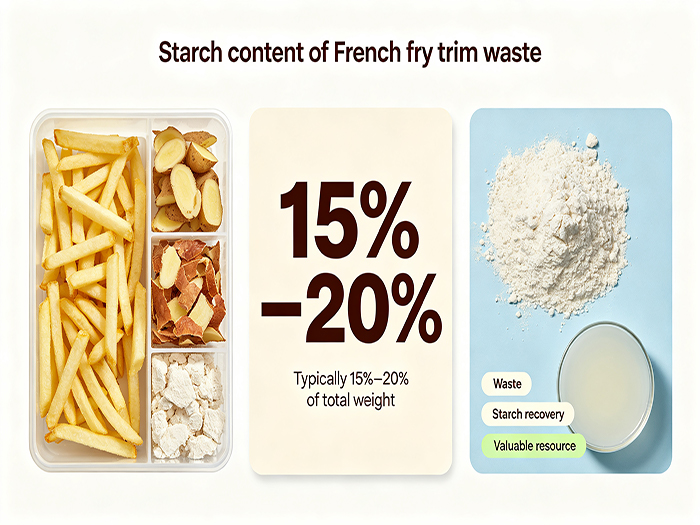 Starch content of French fry trim waste
Recovered potato starch has three main market channels. You can choose the one that fits your local market best.
Food industry is the highest-value channel. Potato starch is used in noodles, pastries, sauces, and as a thickening agent. Food-grade starch commands the best price, but buyers have strict quality and certification requirements. If your local food industry is developed, this is likely your most profitable outlet.
Industrial applications offer volume and stability. Paper manufacturing, textile sizing, and bioplastics production all use potato starch in large quantities. Quality requirements are more relaxed than food grade, and contracts tend to be steady. This channel works well if you can produce at scale.
Animal feed handles the remaining fiber and solids. After starch is extracted, the leftover material still has feed value. Dried fiber and protein solids can be sold to feed mills or used in your own operations. This turns what would be waste into a secondary revenue stream — and brings you close to zero waste discharge.
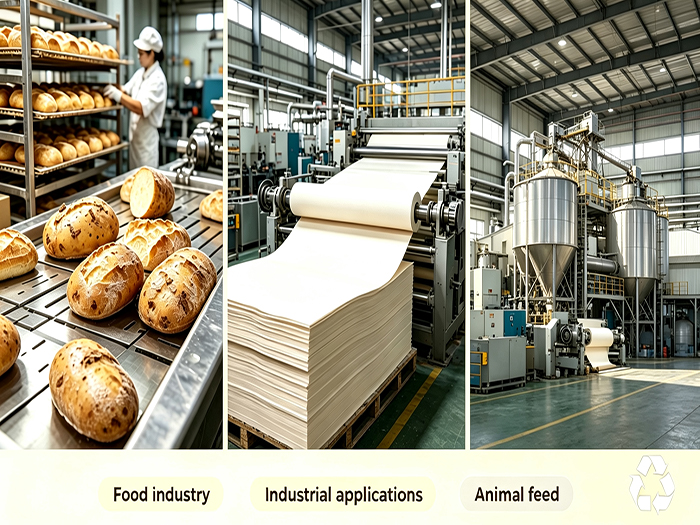 Distribution channels for recycled potato starch
Before investing, run through this checklist. If your operation meets these conditions, the economics of starch recovery work in your favor.
French fry waste volume. Starch recovery becomes economically viable when you have at least 10–15 tons of trim waste daily. Below this threshold, equipment and operating costs outweigh the returns. The more waste you have, the faster the payback.
Budget. A complete recovery system requires investment in extraction, dewatering, and drying equipment. Modular configurations are available, scaled to your waste volume and budget — so you do not have to invest in a full-scale line upfront.
Payback expectation. Most installations reach full return on investment within 18–36 months. Faster payback is possible with higher waste volumes or strong local starch demand. Knowing your target payback helps you choose the right system configuration.
Site and utilities. You need floor space for the recovery line, reliable water supply for washing and extraction, and power for dewatering and drying. A site assessment determines exact requirements before equipment arrives.
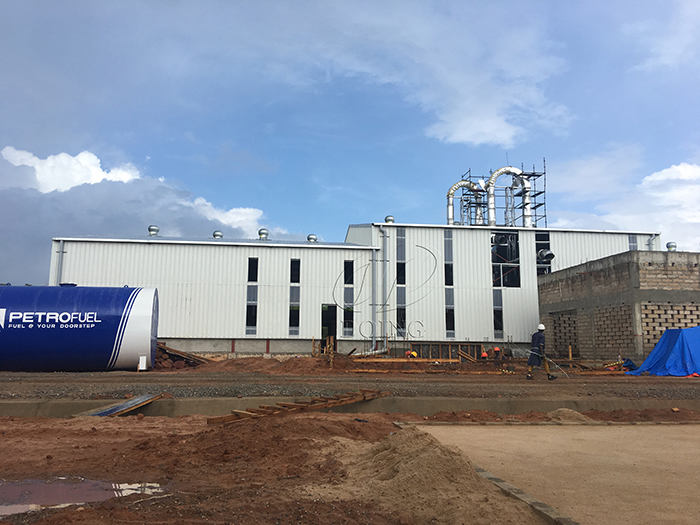 Potato starch production factory
The recovery process converts wet french fry waste into market-ready starch through five stages.
Cleaning and Crushing: Trim waste is first washed to remove sand, dirt, and debris. The cleaned material then goes through a rasping machine that grinds it into fine mash. This step breaks open potato cells and releases the starch granules trapped inside.
Fiber Screening: The mash passes through centrifugal sieves and fine residue screens. These separate starch milk from fiber and solid residues. Multiple screening passes raise the purity of the starch milk before it moves to the next stage.
Refining: Starch milk flows through a series of hydrocyclones. Clean water washes away remaining fine impurities — protein, cell sap, and other impurities. This step determines whether the final starch reaches food-grade quality or stays at industrial grade.
Dewatering: A vacuum filter removes most of the water from the refined starch milk. Moisture drops to 35–40%, producing a solid starch that is easy to handle and feed into the dryer.
Drying: An air-flow dryer brings the starch to 12–14% moisture. The result is dry, powdery starch with stable shelf life, ready for sieving and packaging.
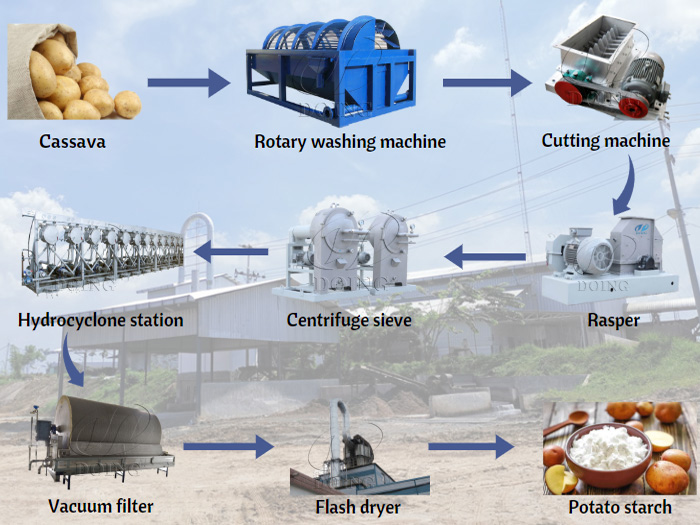 The potato starch recovery process
If you process 10–15 tons of french fry trim waste daily or more, starch recovery is worth considering. A recovery system turns your waste disposal cost into a revenue stream. Henan Jinrui designs starch recovery systems matched to your waste volume and plant layout, with full support from planning through commissioning. Contact us to discuss how to start your trim waste recovery project.
Q1: What can I do with the fiber residue after starch extraction?
The leftover fiber and solids can be dried and sold to feed mills, or used as feed additive in your own operations. This reduces waste discharge and adds a secondary revenue stream.
Q2: How much water and power does the recovery process consume?
Water use depends on system configuration and built-in recycling — most lines recirculate wash water to cut consumption. Power demand scales with capacity; a site assessment gives exact figures for your waste volume.
Q3: Can the recovery line connect to my existing production, or does it need separate space?
It is a standalone system that takes trim waste as input, but can sit adjacent to your processing area to shorten handling. Layout depends on your floor space and current waste flow — a site assessment determines the best setup.
Q4: How often does the recovery equipment need maintenance?
Routine tasks are daily — cleaning screens and checking flow. Key components like the rasping machine and hydrocyclones are inspected every few months based on running hours. We provide a maintenance plan and spare parts to keep downtime low.
Q5: Can I run a trial before committing to a full system?
Yes. We start with a material test on your trim waste to confirm yield and quality, then scope a pilot configuration before full investment — giving you real data from your own operation.