

Cassava Harvest Season in May: Sell Fresh Cassava or Invest in Cassava Processing?
May is cassava harvest season. Farmers and investors face a key choice: sell fresh cassava or invest in cassava processing? Henan Jinrui will help you compare both options and provide a clear path to make the right decision. Let’s explore which path makes the most sense for your business.
Selling fresh cassava offers two clear benefits: immediate payment and zero equipment cost. Farmers can harvest and sell fresh cassava directly to local markets or factories, getting cash in hand the same day. No need for machines, extra labor, or storage facilities. However, this simplicity comes at a cost.
Short shelf life – Fresh cassava begins to spoil within 3–7 days after harvest, especially in hot climates. Post-harvest losses can reach 10–20%, eating into your income.
Price volatility – During peak harvest season, supply floods the market. Buyers control the price, which often falls to 50–100 per ton. Farmers have little leverage to negotiate.
Low profit margin – After paying for labor and transport, the net return is slim. There is no chance to add value or command a better price.
Selling fresh cassava is suitable for small farmers who need quick cash or lack processing facilities. However, selling fresh cassava is not a good long-term strategy for those who want to truly increase their income.
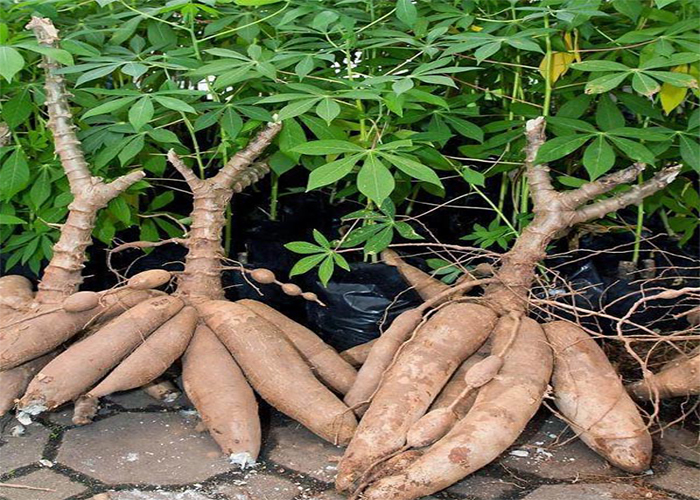 Fresh cassava
Processing fresh cassava into high-value products like cassava flour, garri, or starch requires more investment and effort, but the financial returns are significantly higher. You no longer passively accept low fresh cassava prices but control the value chain, earning a premium from the finished product. The advantages of investing in cassava processing are mainly reflected in three aspects: larger profit margins, longer shelf life, and broader markets.
Larger Profit Margins – One ton of fresh cassava (worth $50–$100) can produce approximately 250 kg of cassava flour or starch, worth $300–$800. This is 4 to 8 times the income from selling fresh cassava.
Longer Shelf Life – Processed products can be stored for 6 to 12 months. You don't need to sell immediately after harvest; you can wait for better prices, achieving stable sales throughout the year.
Broader Markets – Fresh cassava is limited to local buyers, while processed products open doors to wholesalers, food factories, and even export markets.
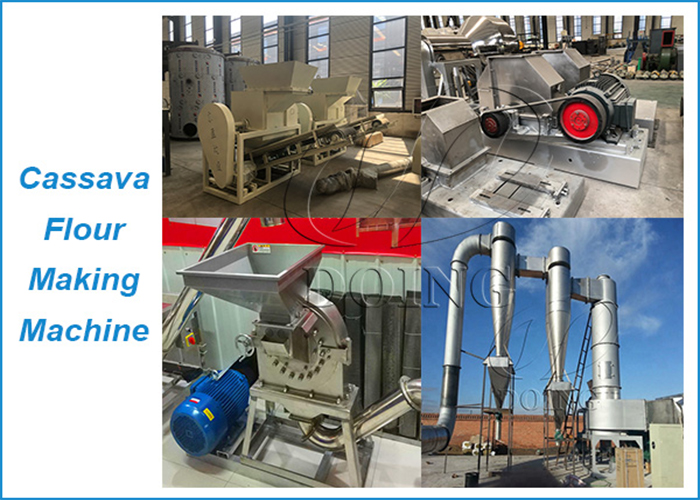 Cassava flour making machine
Furthermore, invest in cassava processing can reduce post-harvest losses by 10–20%, creating a more stable annual income. Although invest in cassava processing requires equipment, training, and a small processing site, the return on investment is far higher than selling fresh cassava directly.Given the clear advantages of processing, how can one shift from selling fresh cassava to processing?
Shifting from selling fresh cassava to processing is simpler than you might think. Here's a simple three-step plan:
Step 1: Choose Your Product. Cassava flour, garri, or starch? Choose based on local demand. Cassava flour is suitable for the baking and gluten-free markets, garri is a staple food in West Africa, and starch targets food processing and industrial buyers. Start with what sells best locally.
Step 2: Start Small, Choose the Right Equipment. A line with a daily processing capacity of 1–5 tons is perfect for beginners. Low investment, learn as you go, and gradually build your customer base. A basic production line includes:
Washer – Removes sand and surface impurities. Henan Jinrui's paddle washer cleans thoroughly, uses little water, and causes minimal damage to the cassava.
Peeler – Removes the outer skin. Henan Jinrui's cassava peeler has a peeling rate of over 96%, reducing labor and fresh cassava loss.
Grinder – Grinds the peeled cassava into a fine, uniform pulp. High-speed pulverizers achieve a crushing rate of up to 98%, fully releasing starch and increasing flour yield.
Dewatering machine – Removes excess water from the slurry. Henan Jinrui's hydraulic press can reduce the moisture content to around 40%, preparing it for the next stage.
Dryer (cassava flour) or garri fryer – Cassava flour is quickly and evenly dehydrated using a flash dryer; garri are evenly baked in an automatic stirring fryer, ensuring they are neither burnt nor undercooked.
Sieving machine – Ensures uniform particle size in the finished product. Henan Jinrui's sieving machine allows for the replacement of different mesh screens to meet the fineness requirements of various markets.
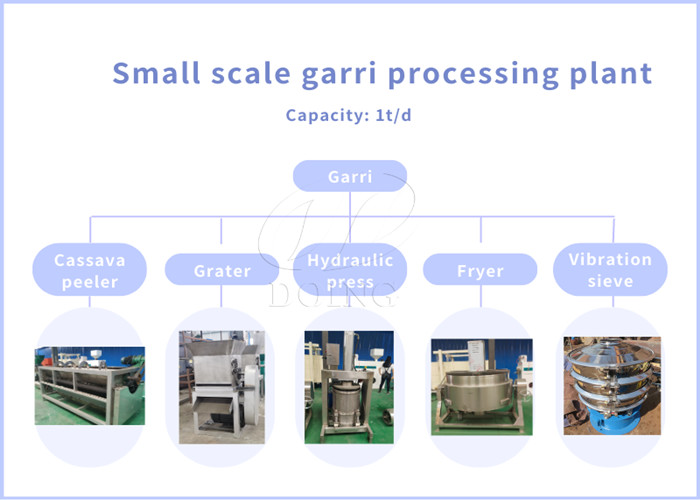 Small-scale garri processing plant
Step 3: Select equipment configuration. Depending on your budget and production goals, you can choose a semi-automatic or fully automatic production line. Semi-automatic lines are lower in cost and simpler to maintain; fully automatic lines save labor and provide stable quality. Henan Jinrui offers both configurations, from single machines to complete production lines.
Don’t let another cassava harvest season pass without adding value to your cassava. Henan Jinrui provides complete processing lines – from single machines to fully automatic systems – to help you invest in cassava processing. We’ve helped producers across Africa build successful businesses with reliable equipment and support. Contact us today and take the first step toward higher profits.