

Analyzing Nigeria's Cassava Flour Market and How to Start Your Processing Plant
For investors and entrepreneurs focused on Nigeria's agricultural processing sector, the cassava flour market represents a highly promising venture. With its large population, growing food demand, and strong policy support for local production, starting a cassava flour processing plant in Nigeria offers significant potential.
Are you considering entering this opportunity? This guide from Jinrui Foodtech will analyze the local cassava flour market outlook, explain the current production landscape, and provide a clear roadmap for starting your own profitable processing plant.
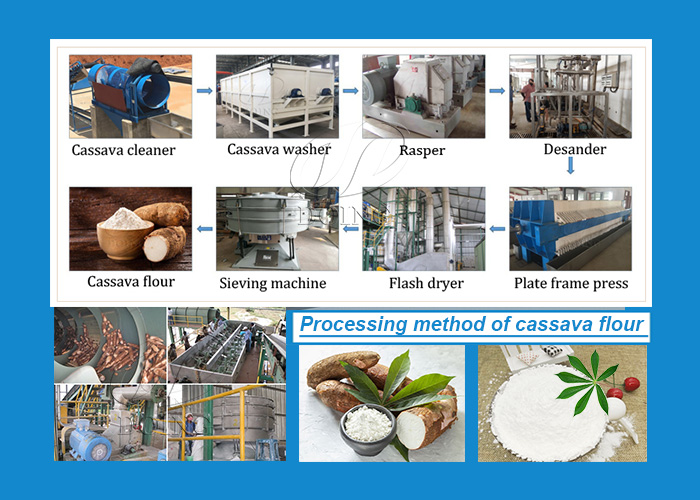 Cassava flour processing machine
Analyzing Nigeria Cassava Flour Market – Opportunity Meets Challenge
The Opportunity: A Market Ready for Growth
Nigeria is the world's largest producer of cassava, meaning the raw material base is vast and secure. This is the first major advantage for anyone considering a cassava flour processing plant in Nigeria. Beyond traditional uses in foods like fufu and garri, there is a fast-growing demand for High-Quality Cassava Flour (HQCF). HQCF is a fine, white, unfermented powder used as a partial substitute for wheat flour in baking, confectioneries, and industrial food production. Government policies actively promoting local flour blending create a ready and expanding market for reliable, high-volume suppliers.
The Challenge: Bridging the Quality and Supply Gap
Despite the raw material abundance and strong demand, a significant gap exists. A large portion of Nigeria's cassava flour production still relies on small-scale, manual, or semi-mechanized methods. This traditional approach faces several critical challenges that your modern plant can solve:
- Inconsistent Quality: Sun-drying leads to contamination and variable moisture. Manual processing results in inconsistent texture and color, making the flour unsuitable for industrial buyers.
- Low Efficiency: Manual methods are labor-intensive and cannot produce the large, uniform batches required by large bakeries or food companies.
- Technical Limitations: Many local equipment fabrications lack the precision for HQCF production, struggle with maintenance, and have high waste rates.
This gap represents the core opportunity. There is a clear need for modern, automated cassava flour processing plants that can deliver consistent quality at a commercial scale. By addressing these challenges, your business can capture a valuable position in Nigeria's cassava flour market.
 Cassava flour processing line
How to Start Your Cassava Flour Processing Plant – A Practical Guide
Building a profitable cassava flour processing plant involves careful planning beyond just buying machines. This step-by-step guide outlines the key stages to launch your venture successfully, focusing on the essential processing technology and setup.
Step 1: Plan Your Supply Chain and Final Market
A successful canssava flour plant starts with a reliable supply of fresh cassava roots. Partnering with local farmer cooperatives is an effective way to secure this. Equally important is defining your final product: will you produce flour for traditional markets or High-Quality Cassava Flour (HQCF) for industrial use? This choice directly shapes your required processing line and business plan.
Step 2: Design Your Factory Layout and Flow
Your processing plant location needs stable utilities (water and power). An efficient layout is crucial for smooth operation—optimizing the flow from receiving raw cassava to dispatching packaged flour will save time and costs.
Step 3: Invest in Core Processing Technology
This is your most critical investment. To ensure consistent quality and scale, you need a modern, integrated cassava flour processing line. This automated line replaces manual methods and typically includes these key machines:
- Cleaning & Peeling: Efficient peelers and washers (like Jinrui Foodtech's models with >95% peeling rate) ensure food-safe, clean raw material.
- Grating & Pressing: High-capacity graters create a fine mash, followed by dewatering presses to remove excess water.
- Drying & Milling: Mechanical dryers (e.g., flash dryers from Jinrui Foodtech) and fine mills are essential for producing stable, uniform flour that meets market standards for moisture (12-14%) and texture.
- Sieving & Packaging: Final equipment ensures consistent particle size and professional bagging.
Step 4: Partner with an Expert for Your Processing Line
Selecting and setting up the right cassava flour processing equipment is complex. Partnering with an experienced supplier like Jinrui Foodtech de-risks your project. We can provide a complete plant solution—helping with design, supplying compatible machinery, and offering installation support and training to ensure your processing plant runs efficiently from day one.
The Nigeria cassava flour market offers a clear opportunity. To succeed, you need a modern processing plant that uses reliable, automated technology to ensure high quality and large-scale production. By securing a steady supply of fresh cassava and investing in the right processing line—you can profitably meet the growing demand for High-Quality Cassava Flour (HQCF).
Ready to build your cassava flour processing plant? Contact Jinrui Foodtech for a free consultation and a customized plan to start your profitable business in Nigeria's cassava flour market.