Blog

Blog

 2026-07-08
Nigeria grows more cassava than any country on earth — over 60 million tons a year, according to FAOSTAT, the UN’s food and agriculture data agency. But here’s the catch: most of it goes straight from farm to table with barely any processing, forcing farmers to accept whatever price the buyer offers. The country spends over ₦600 billion annually importing cassava derivatives like starch and flour that could be processed right there at home, according to the Nigeria Cassava Growers Association.
But that’s changing. More and more farmers across West Africa are moving from selling raw roots to running their own cassava processing lines — and the difference isn’t just in margin, it’s in control.
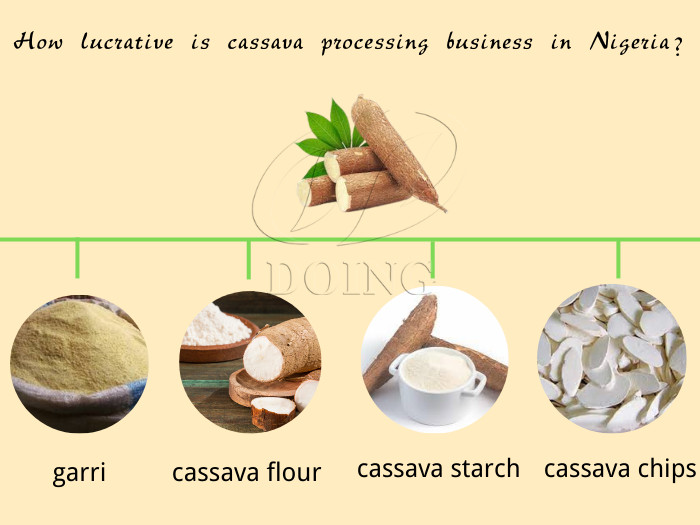
Henan Jinrui builds the equipment that makes that transition possible. Based on what we’re seeing across Nigeria, Ghana, and Benin, here are four cassava processing directions— garri, flour, starch, and chips — that offer the fastest return for farmers and traders ready to move up.
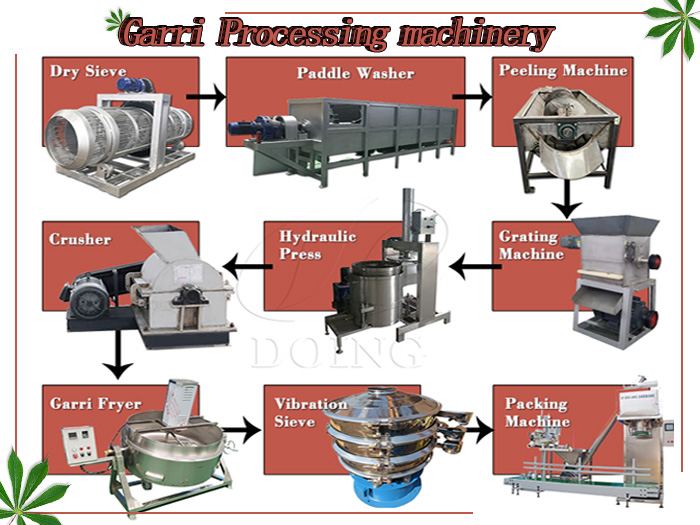 Garri processing plant
Garri remains the single largest cassava product in West Africa. Every household consumes it. Every market sells it. Demand is steady and high-volume.
For someone new to cassava processing, garri is the most straightforward starting point. The process is well-known: peel, wash, grate, ferment, dewater, sieve, fry. What changes with equipment is the speed, consistency, and volume.
A basic garri processing setup lets you:
Process 1-3 tons of cassava roots per day into finished garri
Sell at a significantly higher margin than raw roots
Build local brand recognition before scaling up
Many successful processors in Nigeria started with a single garri frying machine and expanded from there. The equipment investment is moderate, the learning curve is short, and the market is already there waiting.
Henan Jinrui supplies complete garri processing lines — from cassava washing and peeling to grating, pressing, and frying — designed for both small startup workshops and larger industrial facilities.
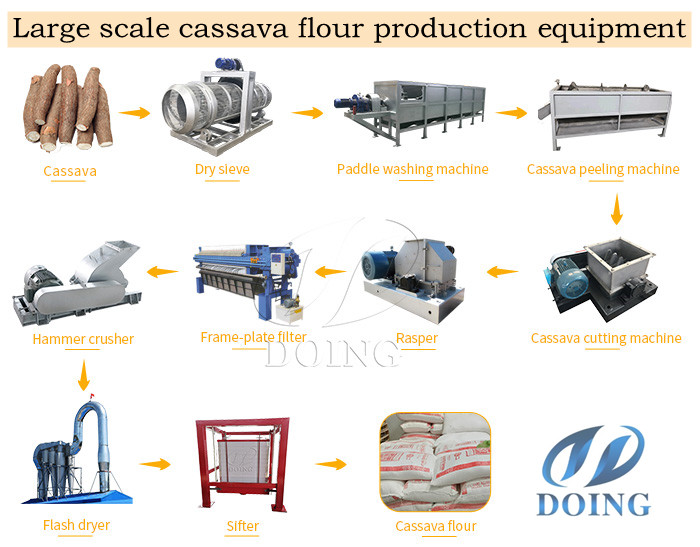 Cassava flour processing plant
Cassava flour is one of the fastest-growing product categories in Africa. Bakeries use it to replace imported wheat flour. Snack manufacturers use it in production. The Nigerian government has actively promoted cassava flour blending in bread and confectionery to reduce wheat import bills — a policy documented by the Federal Ministry of Agriculture and Rural Development.
The processing requirements are different from garri — you need drying and fine milling equipment to produce consistent food-grade flour. But the market is larger and the margins are competitive.
Why this matters for farmers and traders:
Cassava flour has a longer shelf life than fresh roots, giving you more time to sell
Industrial buyers (bakeries, food factories) purchase in bulk with regular orders
The export market for cassava flour to other African countries is growing
Henan Jinrui provides cassava flour production lines covering washing, peeling, grinding, dewatering, drying, and fine milling — configured for small, medium, and large capacities depending on your target output.
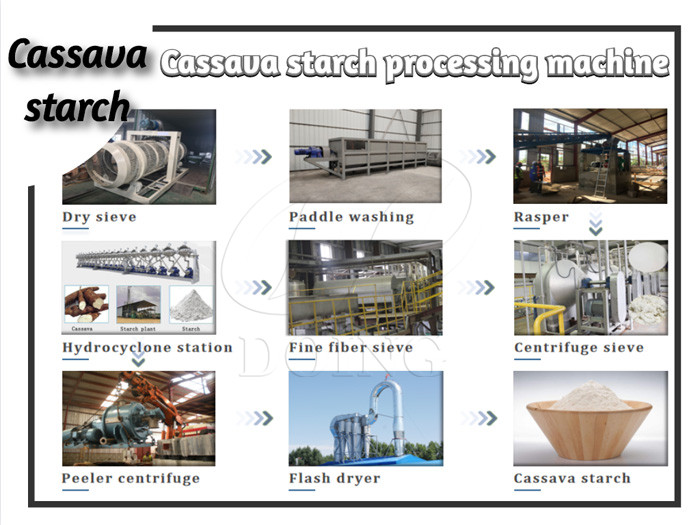 Cassava starch processing plant
Cassava starch is used across food processing, paper manufacturing, textiles, pharmaceuticals, and adhesives. Despite Nigeria being the world’s largest cassava producer, local starch production still can’t meet domestic demand — much of what’s consumed is imported. That gap is an opportunity.
Starch processing requires more specialized equipment than garri or flour — extraction, refining, dewatering, drying, and packaging stages. But the price per ton is significantly higher, and industrial buyers are always looking for reliable local suppliers.
For farmers and traders ready to move beyond basic cassava processing, starch production represents a substantial step up in value capture. A ton of raw cassava roots sells for one price. The starch extracted from that same ton sells for several times more.
Henan Jinrui designs and builds complete cassava starch plants — from root receiving and washing through starch extraction, refining, drying, and final packaging — with capacities from 5 tons to 100+ tons per day.
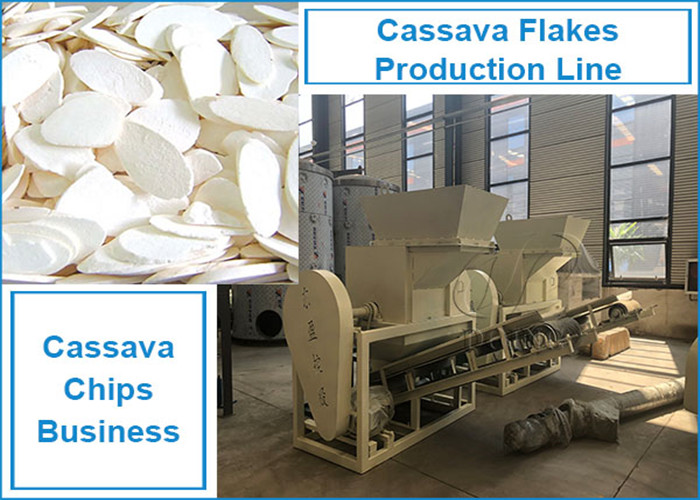 Cassava chips processing line
Cassava chips are dried pieces of cassava used primarily as animal feed ingredient and as raw material for industrial starch and ethanol production. The processing is simple: wash, peel, chip, dry. No complex machinery required.
What makes chips attractive:
Simple equipment with low upfront investment
Strong export demand from Europe and China for animal feed use
Long shelf life — dried chips store well without refrigeration
Can be produced at any scale, from farm-level to industrial
For a farmer or trader looking to test the export market without heavy machinery investment, cassava chips are the lowest-risk entry point. The drying technology (solar, hot air, or rotary drum) determines capacity and quality consistency, but the barrier to entry is genuinely low.
Henan Jinrui supplies cassava chipping and drying equipment designed for both small farm-level operations and larger export-oriented facilities.
| Direction | Investment Level | Equipment Complexity | Market | Best For |
| Garri | Low to medium | Low | Local retail, wholesale | First-time processors, local market focus |
| Cassava flour | Medium | Medium | Bakeries, food factories, export | Scaling up, bulk buyers |
| Cassava starch | Medium to high | High | Industrial, pharmaceutical, export | Higher margin, long-term investment |
| Cassava chips | Low | Low | Animal feed, export | Testing export market, minimal upfront cost |
The right cassava processing line depends on your capital, your local market, and your growth timeline. Many processors begin with garri or chips, then add flour or starch lines as they grow.
 Cassava processing plant
When you sell raw cassava roots, you compete on price with every other farmer. Your buyer decides the value.
When you process cassava into garri, flour, starch, or chips, you control the value. You decide the price. You build relationships with buyers who need consistent supply — not just whoever shows up at the farm gate.
The numbers speak for themselves. A ton of fresh cassava roots sells for a base commodity price. Process that same ton into garri or high-quality flour, and the revenue multiplies. Add starch processing capability, and the margin expands further.
Henan Jinrui Food Engineering Co., Ltd. has been supplying cassava processing equipment to African markets for years. We work with first-time processors setting up their first line, and with large industrial facilities expanding capacity. Our team provides equipment selection guidance, layout support, and after-sales service.
Q: I’m a cassava farmer — can I afford to start processing?
A: Yes. Start with a basic garri or cassava chips setup — the equipment investment is moderate and the payback period is short. Many processors started at farm scale and expanded as they grew.
Q: Which product has the highest profit margin?
A: Cassava starch generally has the highest margin per ton, but requires more equipment investment. Garri offers the fastest return for first-time processors due to steady local demand.
Q: Do I need a separate building for processing?
A: A covered workspace with water and power access is sufficient for basic garri or chip production. Larger lines (flour, starch) require dedicated facility space.
Q: Is there really export demand for cassava chips?
A: Yes. Europe and China import significant volumes of cassava chips for animal feed and industrial use. The quality requirements are straightforward — properly dried, clean, consistent moisture content.
Q: Can I start with one product and add others later?
A: Absolutely. Most processors start with garri or chips, then add flour and starch lines as the business grows. Modular equipment makes expansion straightforward.
Q: How does Henan Jinrui support first-time buyers?
A: We provide equipment specification guidance, plant layout recommendations, installation support, and operation training. Our team has experience working with processors across Nigeria and West Africa.
Nigeria processes only about 1% of its cassava into high-value products — a fraction of what Thailand achieves with roughly half the production volume, according to UN Comtrade data. The opportunity is not in growing more cassava — it’s in processing what’s already being grown.
Whether you start with garri for the local market, flour for the bakery industry, starch for industrial buyers, or chips for export, the move from selling raw roots to selling processed products fundamentally changes your business.
The equipment is available. The market is waiting. The question is which direction you take first. Contact Henan Jinrui to discuss your cassava processing plans — we’ll help you find the right starting point for your scale and goals.
Want to know more about our products or services? Fill out the contact form below, and we’ll to get back to you and you will get the price list. Please also feel free to contact us by email or phone.( * Denotes a required field).