

Rasper vs Grater in Potato Starch Extraction: Why Starch Production Needs a Rasper
In potato starch extraction, the rasper is the machine that ruptures the potato cells to release the starch. A grater, built to crush cassava tubers into coarse particles, does not rupture enough cells — the starch stays locked inside the fiber and leaves with the waste stream. That is the fundamental difference between the two machines, and it is why starch production needs a rasper.
You should understand these four things: what cell rupture does, what a rasper and a grater each do, what drives the rupture rate on a rasper, and how to size one for your potato starch line.
Why Cell Rupture Sets Your Starch Yield
Starch granules sit inside potato cells. Nothing downstream — no screen, no centrifuge, no washer — can recover starch that never left the cell in the first place. If the rasper does not rupture the cells completely, you lose that starch for good.
This makes cell rupture the single biggest lever on your yield. The separation stage and every step after it only work with what the rasper frees up front.
What a Rasper Does — and What a Grater Does
A rasper uses a high-speed rotating drum fitted with saw-tooth blades to tear the potato into a fine pulp. It ruptures the cells at roughly 98%, releasing the starch in a form that the next stages can wash, separate, and concentrate.
A grater is used to crush cassava tubers into coarse particles. Its output is coarse, and it is widely used for garri and other cassava processing operations that do not require fine crushing.
These are two fundamentally different machines for two fundamentally different outcomes.
| Equipment | How it works | Cell rupture | Typical use |
|---|---|---|---|
| Rasper | High-speed, saw-tooth drum; tears pulp fine | ~98% | Potato / cassava starch extraction lines |
| Grater | Crushes cassava tubers into coarse particles | Low — too coarse for starch extraction | Garri and other cassava processing that does not require fine crushing |
Why Cell Rupture Rate Cannot Be Negotiable in Starch Extraction
In a potato starch line, the rasper is the only machine that can deliver the rupture rate the process requires. Three points explain why:
The potato cell wall must be broken open to free the starch granules. A low-rupture shredder leaves the starch locked inside.
Every percentage point of unruptured cells represents starch lost in the fiber waste. On a 30 TPH line processing several hundred tonnes of potatoes per day, that loss compounds across every operating hour.
No downstream equipment can recover starch that never left the cell. Improving the separation stage or the washer cannot compensate for a rasper that underperforms.
This is why sourcing the right rasper is the first and most consequential decision in planning a potato starch line.
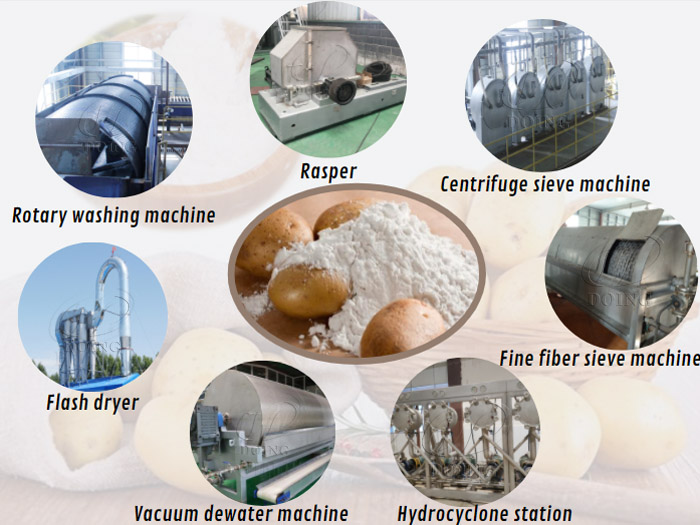 Potato starch extraction machine
What Drives Cell Rupture — and Your Yield
Four variables set how completely your rasper ruptures the cells:
Blade sharpness: Dull blades tear instead of cut. Rupture rate drops, and the pulp texture changes. Inspect blades at every shift change; resharpen or replace before you see yield drift.
Drum speed: A rasper for potato starch runs at roughly 1800–2100 r/min. Speed is the primary control on rupture force. Too slow and cells stay intact; too fast and you risk damaging the starch granules.
Feed consistency: A steady, evenly metered feed lets the blades cut uniformly. Surges and clumps produce uneven rupture. A simple feed control — even a simple vibratory feeder — helps more than you might expect.
Drum gap and blade pressure: The clearance between the blade tip and the drum surface sets how fine the pulp is cut. Even a small change in gap affects rupture rate noticeably.
Beyond these four, two practical notes:
Rasping too hard has consequences. Over-rasping cracks the starch granules, floods the separation stage with fine fiber and pulp, and raises power draw without lifting yield. The goal is high rupture — not maximum speed.
Monitor the pulp, not just the settings. Once the line is running, the color and texture of the pulp tell you whether rupture is holding. A coarser-looking pulp than expected is a signal to check blade wear or feed consistency before you check anything else.
Jinrui Foodtech (Henan Jinrui) supplies rasping drums as part of its potato and sweet potato starch processing lines, with drum speed, blade configuration, and gap settings matched to your target cell rupture.
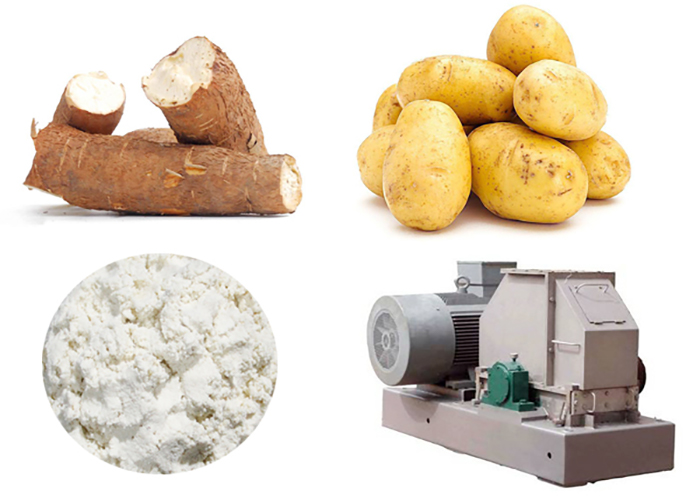 Rasper for potato starch processing line
How to Choose and Size a Rasper for Your Potato Starch Line
Three inputs determine the right rasper for your line:
1. Your target throughput A rasper sized for potato starch lines typically covers roughly 4–50 TPH of fresh feed, running at 1800–2100 r/min. Verify the motor rating and available power supply before you commit.
2. Your potato variety Potato varieties differ in hardness and fiber content. A variety with higher fiber content may need a more aggressive blade configuration or slower feed rate to hold 98% rupture. Tell the supplier what you plan to process.
3. Your starch yield target If you are targeting food-grade starch purity, the rasper settings need to hold consistently across the full operating range — not just at peak feed. Confirm with the supplier that the machine can hold the rupture rate at your target throughput.
One mistake to avoid: using a low-cost grater to save on equipment cost. The saving disappears in the first week of operation, when you see the yield you are losing every day the line runs.
Jinrui Foodtech sizes a rasper to your throughput, potato variety, and rupture target, and can run a trial on your raw material before you sign.
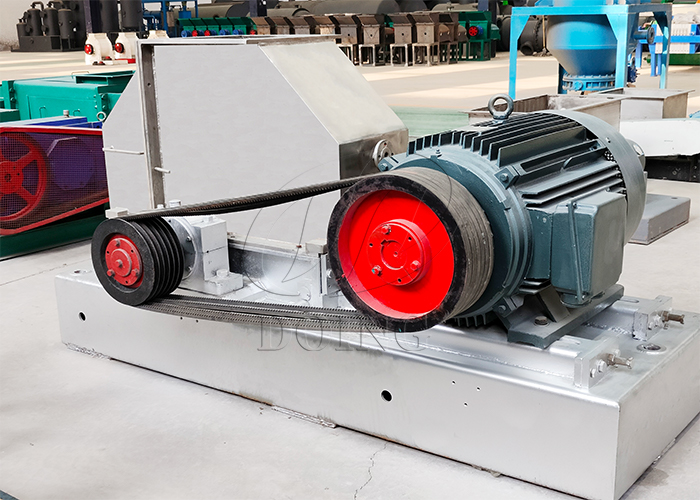 Rasper from Henan jinrui
Frequently Asked Questions
Can I run a potato starch line with a grater instead of a rasper?
No — a grater cannot reach the cell rupture a potato starch line needs. Before you sign, ask the supplier three things: can they guarantee a cell rupture rate for starch extraction, is the machine built for starch extraction rather than coarse shredding, and will they show the rate it achieves on your potato variety. Vague answers tell you what you are buying.
How do I verify the rupture rate a supplier claims for my rasper?
Do not accept the rupture rate on paper alone. Verify it three ways: run a trial on your own potatoes, send a pulp sample for a rupture-rate test, and write the rupture rate into the acceptance criteria in your contract. If the measured rate falls well below the target, your yield — not just the spec sheet — is what suffers.
What spare parts should I keep on hand to avoid rasper downtime?
Keep at least one set of saw-tooth blades, screen mesh, and bearings in stock from day one — these are the parts that halt the rasper when they fail. Log the running hours and track blade wear against throughput. When rupture rate drifts at normal feed, the blades are telling you they need replacing before the next planned stop.
How do I tell whether my rupture rate is real, or just a number on a spec sheet?
A high rupture rate only pays off if the starch comes out whole. Test the output, not the claim: squeeze a pulp sample — it should feel gritty, with clean starch that settles, not slick and cloudy. If the starch will not settle cleanly, the drum is cutting past the cell wall into the starch itself, and the rupture rate is inflating your yield estimate rather than raising it.
Does one rasper handle potato and sweet potato starch the same way?
Not exactly. Potato and sweet potato differ in cell structure and fiber content, so the blade configuration, drum speed, and feed setting that give 98% rupture on one may need adjustment on the other. Tell the supplier both crops you intend to run, and have them confirm the rasper is configured for each — or sized for the harder of the two.
Get a Rasper Spec'd to Your Starch Production
The rasper is where your starch yield is won or lost. Send Jinrui Foodtech your potato variety and target capacity, and get a rasper configured to your rupture and yield goal — not just to your throughput.