

How Can I Verify a Cassava Processing Equipment Manufacturer Before Buying?
A cassava processing equipment manufacturer can be verified without traveling to China. Business registration, production capability, export records, and after-sales terms are all information a genuine manufacturer can share remotely — and will share without hesitation when asked.
The four areas below cover what to check, how to check it, and the warning signs that tell you to walk away.
1. Check the Company's Basic Background
Before getting into equipment specifics, find out who you are actually dealing with. A legitimate manufacturer should be able to share its business registration documents — not just a brochure, but the actual operating license issued by the local government. The company name, registered capital, and founding year shown on that document should match what the sales team tells you. If they do not, move on.
One common situation worth understanding: some suppliers in China are trading companies, not manufacturers. They buy equipment from a factory and resell it, adding a markup without controlling production quality. A trading company may have a professional-looking website and respond quickly to inquiries, but it cannot show you the actual production floor, manage quality control directly, or customize equipment the way a true manufacturer can. Ask specifically whether the equipment you are interested in is manufactured in-house, and request photos or video of the production line — not just stock images from the internet.
For reference, a well-established manufacturer like Jinrui Foodtech has over 10 years of documented production history in cassava processing equipment, a verifiable factory address (Jiaozuo, Henan), and the ability to arrange a live video tour or on-site factory visit without hesitation. None of this is a luxury — it is baseline information that a genuine manufacturer can provide.
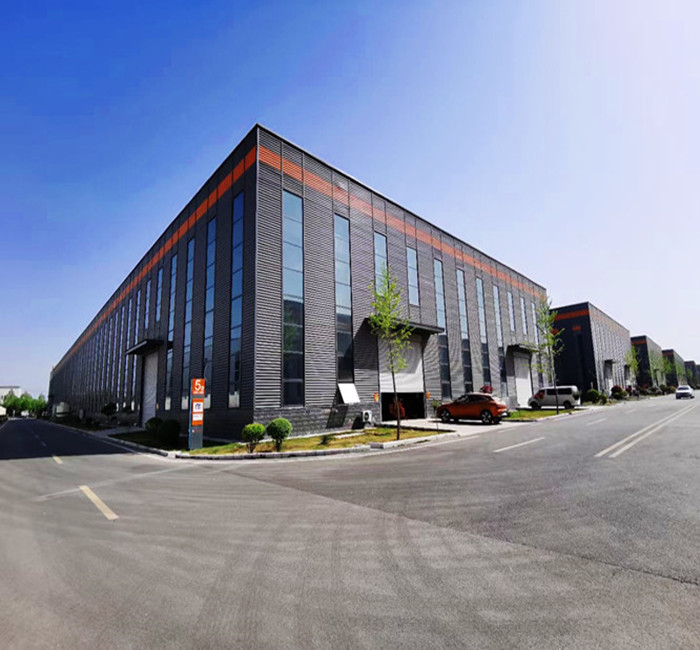 Jinrui Foodtech manufacturing facility
2. Verify Production Capability Without Traveling to China
You do not need to book a flight to verify whether a factory can actually build what it claims. The first step is straightforward: ask for a video. Not a curated marketing clip — a real-time walk-through of the workshop showing active production, multiple angles, and the equipment being discussed. Most serious manufacturers expect this request and have footage ready. If the response is a stock photo or a redirect to a website, that tells you something.
Beyond a video walk-through, ask specifically for documentation of past export orders. A manufacturer with real experience shipping to West Africa, Southeast Asia, or other cassava-processing regions should be able to show commercial invoices, packing lists, or shipping documents from previous orders. These do not need to name the buyer, but they should show the country of destination, the equipment configuration, and approximate dates. Jinrui Foodtech, for example, maintains export records across multiple African markets and can share reference documentation with prospective buyers upon request — not as a sales tactic, but as a practical response to a reasonable due diligence question.
If the order is significant enough, commissioning a third-party inspection is a cost-effective step. Organizations like SGS, Bureau Veritas, or CCIC can send an inspector to the factory to verify that the equipment matches the agreed specifications before it ships. The cost typically ranges from $300 to $2,000 depending on factory location, inspection scope, and report detail — small relative to the value of the order, and most reputable manufacturers do not object to it.
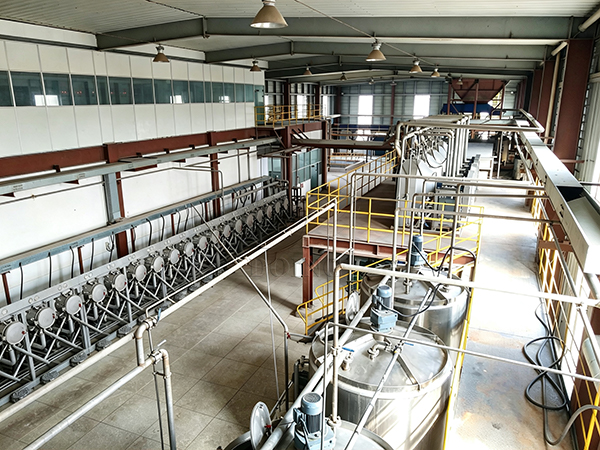 Jinrui Foodtech cassava starch processing line in operation
3. Ask for the Right Documents Before Any Payment
Documentation is not bureaucracy — it is your protection. Before signing any contract or making any payment, request the following from any supplier you are seriously considering:
Business registration documents, including the manufacturing license and any product-specific certifications the equipment may carry. These confirm the company exists legally and is authorized to produce what it sells.
Technical specifications and type drawings for the equipment in question. A genuine manufacturer produces these documents as part of its own design process. If all you receive is a product catalogue downloaded from a competitor's website, that is a problem.
Reference export records, as mentioned above. Even if the supplier cannot name specific buyers, a packing list, bill of lading, or shipping manifest showing actual cargo leaving the factory carries more weight than a screenshot of a customer's message.
A clear proforma invoice and contract draft before payment terms are agreed. This should itemize equipment specifications, delivery timeline, payment milestones, warranty conditions, and after-sales support in writing — not just in a sales email.
Buyers sometimes hesitate to ask for these documents because they worry it will seem like distrust. In practice, experienced manufacturers expect exactly this from serious international buyers and have standard processes for providing it.
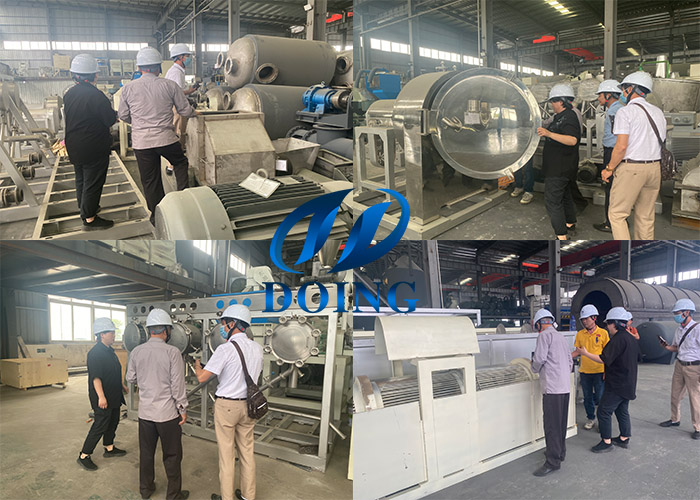 Venezuelan customer visits Jinrui factory
4. Evaluate After-Sales Support Before You Commit
Equipment quality matters, but it is only half the picture. A machine that arrives without installation guidance, trouble*** support, or accessible spare parts can sit idle for weeks after delivery — costing money while generating nothing.
Before signing, ask the supplier to walk you through their after-sales process in specific terms: How is on-site installation handled? Does the supplier send technicians, or do they provide written installation manuals and remote guidance only? What is the typical response time when a problem is reported? Is there a spare parts inventory, and how long does international shipping of replacement parts take?
Be specific. "We provide after-sales support" is not an answer. "We send one technician for the first installation, and replacement parts for standard components ship within 5–7 business days" is. Jinrui Foodtech's standard practice, for instance, includes on-site installation support for significant orders and a documented spare parts protocol — terms a serious buyer should expect to see written in the contract, not implied in a conversation.
Also review the warranty clause carefully. A standard warranty period, clear scope of coverage, and defined process for reporting and resolving issues should all appear in the contract. Vague warranty language — or the absence of one entirely — is a reason to slow down.
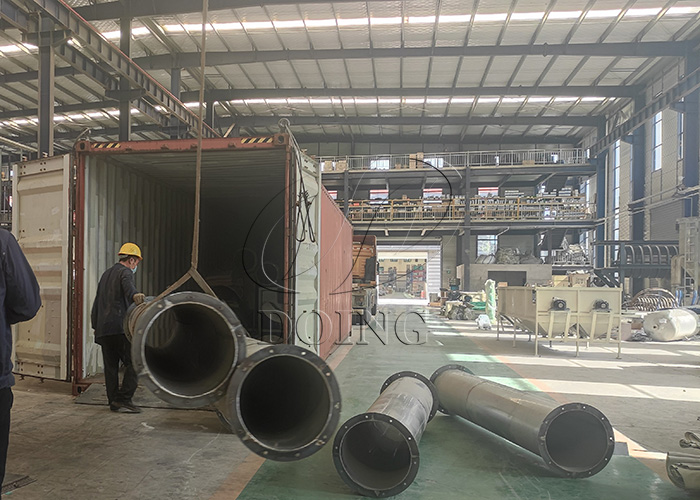 Jinrui Foodtech cassava starch machine loading for delivery
5. Watch Out for These Red Flags
Verification is not paranoia — it is risk management. A few patterns, when spotted early, can save a great deal of trouble:
Payment to personal accounts or informal channels. Any reputable supplier will have a corporate bank account in the company's name. Requests to pay through WeChat, Alipay personal accounts, or a third-party individual are a serious red flag, regardless of how professional the communication has been otherwise.
Prices significantly below market rates. If a cassava starch line that typically costs $80,000 is quoted at $30,000, the gap needs a concrete explanation — and "factory direct pricing" alone is not one. Lowball pricing is a common tactic to lure buyers, followed by compromises on quality, missing components, or demands for additional payments after the initial deposit.
Reluctance to share any documentation. A manufacturer that can show its work should be able to share its credentials. If the response to document requests is consistently deflection — "we will send it later," "it is being processed," or redirecting to a different topic — that silence is the answer.
No verifiable export record. Even a small-scale operation selling internationally should have some record of cross-border shipment. The absence of any export documentation, combined with vague descriptions of past customers ("many clients in Africa, we cannot name them"), warrants further scrutiny.
A manufacturer that welcomes verification is one that has nothing to hide — and that attitude alone tells you more than any sales pitch will.
Complete Your Supplier Verification
Before you commit to any cassava processing equipment supplier, request four things: business registration documents, factory video footage, reference export records, and a written warranty and after-sales clause. A genuine manufacturer will provide all four without hesitation.
If you are evaluating suppliers for a cassava processing line, send Jinrui Foodtech your verification checklist — the documents you need to see and your target capacity — and we will respond with our full documentation package so you can complete your due diligence with confidence.
Can I verify a cassava processing equipment manufacturer remotely from outside China?
Yes. Business registration information can often be looked up through China's national enterprise credit information system using the company's unified social credit code. Export records, technical documents, and reference contacts can all be shared electronically before any payment is made. A live video factory tour can be arranged via video call at a time that suits you.
What payment terms are safe when buying equipment from China?
A common and widely accepted structure is a 30% deposit to begin production, with the balance paid against a copy of the bill of lading before shipment. Using a letter of credit through a bank adds a further layer of protection for larger orders. Avoid any request to pay a personal account or through informal channels — that is a red flag regardless of how professional the supplier appears.
Should I hire a sourcing agent to verify the manufacturer for me?
A sourcing agent can help if you have no experience dealing with Chinese suppliers, especially with language barriers and document interpretation. However, the steps in this guide are designed to be completed by a buyer directly. If you do use an agent, make sure they are independent — not referred by the supplier itself, which creates a conflict of interest.
How long does the supplier verification process take?
Most of the document and video checks in this guide can be completed within 3–7 business days if the supplier responds promptly. Third-party inspection (SGS/BV/CCIC) adds 1–2 weeks depending on factory location and inspector availability. Verification is fast relative to the production lead time — which is typically 30–75 days — so it should never be skipped to "save time."
Can a video factory tour be faked?
It can be staged, but several checks reduce that risk. Request a live video call rather than a pre-recorded clip — a real factory cannot be rehearsed on short notice. Ask to see the specific equipment you are ordering being assembled or tested, not just the general floor. Cross-check the address on the business registration with the location shown in the video. And ask for export documents that name the same factory — a staged video rarely comes with verifiable shipping records.
What warranty terms should I expect from a cassava equipment manufacturer?
A standard warranty covers 12 months from shipment for key components and manufacturing defects, with 6 months for wearing parts (blades, screens, bearings, seals). The contract should state the coverage scope, the reporting process, and the response time for resolving issues. Vague or missing warranty language is a reason to slow down — not speed up.
Can a small order still be verified the same way?
Yes. The document checks, video tour, and export record review apply to any order size. For smaller orders, a full third-party inspection may not be cost-effective, but the business registration lookup and a live video call are nearly free and sufficient to confirm the supplier is a genuine manufacturer. Even a $10,000 order deserves the same basic due diligence as a $200,000 one.