

Modular Garri Processing Plant: How to Expand in Phases
For many small and medium-sized garri processors in West Africa, the question is not whether to expand, but when to expand and how much capacity to add. Building a complete large garri production line from the beginning can place too much pressure on initial capital, especially when orders are still developing.
A modular garri processing plant provides another route: configure equipment for current production, then add capacity as demand, cassava supply, and cash flow grow. The key is not simply adding more machines; it is keeping the capacity of each processing stage balanced as the plant expands.
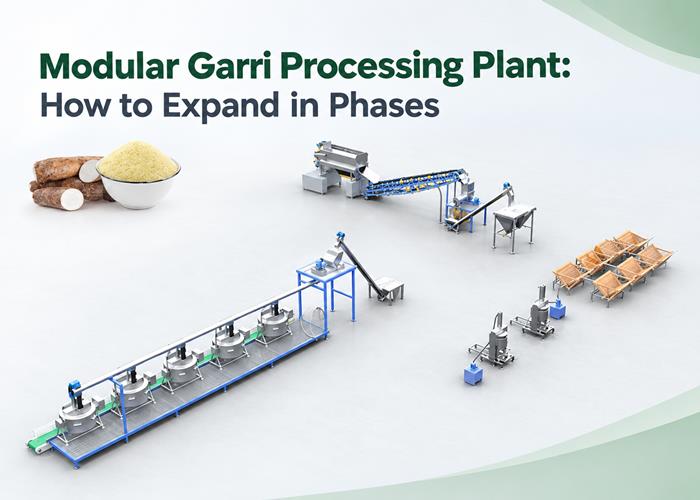 Complete garri processing plant
1. What Is a Modular Garri Processing Plant?
A modular garri processing plant is a production setup where capacity can be increased by adding or upgrading individual equipment units instead of replacing the entire plant. A small processor may initially install equipment for cassava peeling, grating, pressing, frying, and sieving, then add equipment or upgrade bottleneck stages as production requirements increase.
A typical expansion path may look like this:
Initial stage: Install the core equipment required for current production.
Capacity increase: Add another fryer, grater, press, or other equipment where the existing process becomes a bottleneck.
Further expansion: Improve conveying, feeding, processing continuity, and packaging as the plant moves toward a more integrated production line.
| Factor | Modular Plant | Integrated Garri Production Line |
| Initial investment | Lower starting commitment | Higher upfront investment |
| Expansion | Add equipment in stages | Usually designed around a target capacity |
| Capacity planning | Grows with demand | Target capacity is defined earlier |
| Best suited for | Growing processors and uncertain markets | Established demand and stable raw material supply |
| Equipment utilization | Can match current production | May have unused capacity if demand is initially low |
Modular does not mean temporary or poorly planned. The initial equipment should be selected with future expansion in mind.
For example, if Phase 1 will eventually connect to a larger production line, the equipment layout, electrical capacity, material flow, and available floor space should be considered before the first machines are installed.
At Jinrui Foodtech (Henan Jinrui), we normally look at the future target capacity when configuring a small plant, even when the customer only wants the first-stage equipment. The question is not just “What can we buy today?” but “Can today's equipment work with the next stage?”
2. Why Expand a Garri Plant in Phases?
The main reason to expand a garri plant in phases is to make production capacity grow with the business instead of paying for a large capacity years before it is needed.
Lower Initial Investment
A phased approach allows the processor to invest according to the current production target. Capital can remain available for cassava purchasing, working capital, packaging, market development, and other operating requirements.
More Flexibility
Garri demand can change by season, location, customer type, and cassava availability. A modular configuration allows production capacity to develop as these conditions become clearer.
Less Unused Capacity
A large machine may not improve total production if upstream or downstream processing stages cannot handle the additional volume. Expanding only one part of the line without checking the rest of the process can simply move the bottleneck.
Better Cash-Flow Control
Expansion can be linked to measurable business milestones. When sales, raw material supply, and production utilization support additional capacity, the next equipment investment can be made accordingly.
The most common expansion mistake is buying equipment for a final target capacity before confirming that the current market can absorb the output. For a processor with unstable orders, a staged investment plan can reduce the risk of carrying unused production capacity.
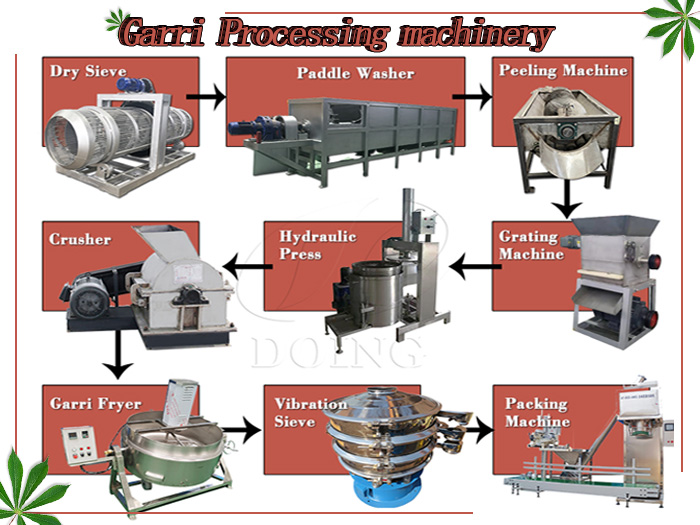 Modular garri processing plant
3. How to Expand a Garri Processing Plant in 3 Phases?
A three-phase expansion model is a practical planning framework rather than a fixed industry standard. Actual output depends on equipment specifications, working hours, cassava characteristics, frying method, labor, and plant layout.
| Phase Example | Garri Output | Main Focus | Typical Expansion Trigger |
| Phase 1 | 1–2 TPD | Establish core production | Stable production and initial market |
| Phase 2 | 3–5 TPD | Remove bottlenecks and increase output | Existing equipment approaches full utilization |
| Phase 3 | 5–10+ TPD | Build a more integrated production line | Stable orders, cassava supply, and infrastructure |
Phase 1: Establish the Core Production Process
For a small garri processing operation, Phase 1 typically includes cassava peeling, grating, pressing, frying, and sieving.
A practical starting target is around 1–2 TPD of garri output, depending on the available cassava supply, working hours, equipment configuration, and labor arrangement.
At this stage, the processor should track:
Fresh cassava processed per day
Actual garri output per day
Daily working hours
Labor requirements
Frying throughput and processing time
Equipment downtime
The purpose is to establish a stable production process and collect actual operating data before increasing capacity.
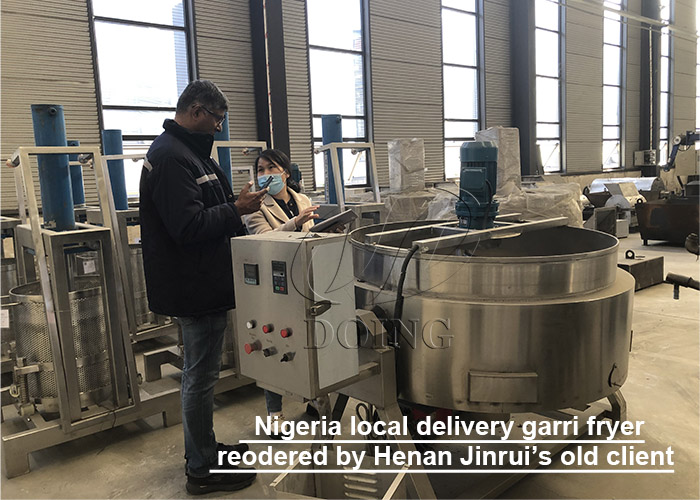
For a 2 TPD garri project in Nigeria, Jinrui Foodtech supplied equipment based on the customer's required production capacity and existing production conditions rather than starting with a large-scale configuration. This type of project provides a practical starting point for evaluating what should be expanded later.
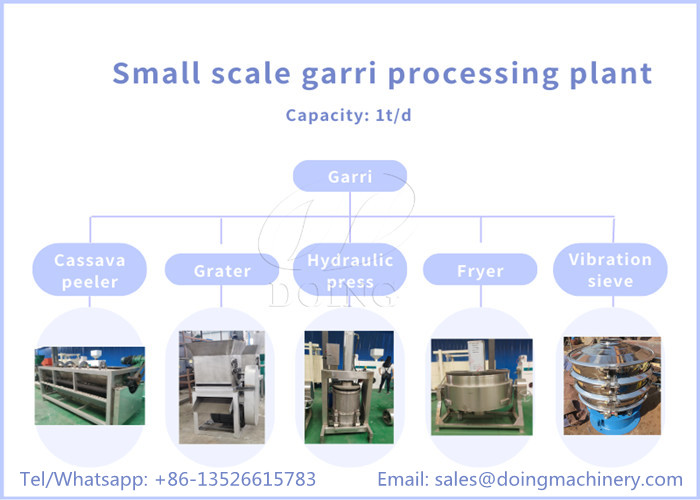 Garri making machine
Phase 2: Remove Bottlenecks and Increase Output
Once the existing equipment approaches its practical operating limit, expansion should begin with the processing stage that restricts total plant output.
The limiting stage, not the largest machine, defines plant output. Adding a second grater, for instance, will not increase overall production if the fryer cannot process the additional material.
The first step is therefore to compare the actual throughput of each processing stage. If frying is the bottleneck, additional frying capacity may be required. If grating is limiting production, grating capacity should be increased. If pressed cassava is accumulating before frying, the pressing stage may need to be upgraded or expanded.
Typical equipment capacities used for phased planning include (taking Jinrui Foodtech equipment as an example) :
Garri fryer: approximately 100 kg/h per unit; additional fryer units can be added as output requirements increase.
Cassava grater: approximately 1–2 t/h.
Hydraulic press: approximately 0.5–1.5 t/h.
These capacities should be evaluated by processing stage rather than compared as if they represent the same material. Grater and press capacities relate to upstream cassava processing, while fryer capacity is based on frying throughput. The equipment combination should therefore be matched according to the material flow and actual production requirement of the complete process.
A Phase 2 target may be around 3–5 TPD of garri output, but the appropriate capacity should be determined from the actual throughput of the existing equipment and the required production target.
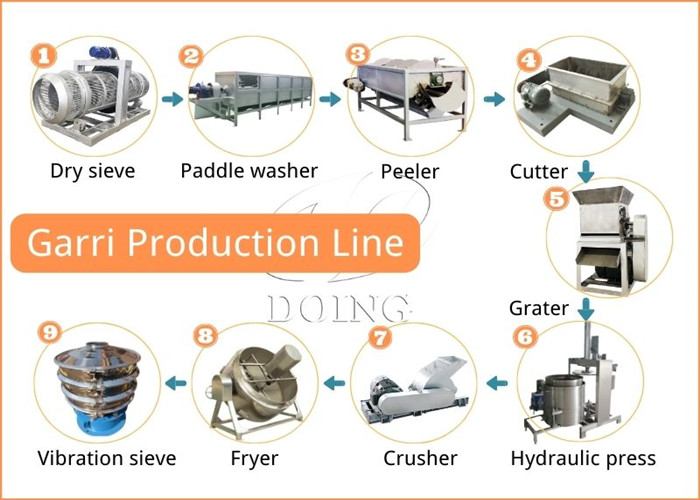 Garri production line
Phase 3: Move Toward a More Integrated Production Line
When production reaches a higher and more stable level, the next step is not simply to keep adding individual machines. The plant may need a more integrated arrangement with improved material transfer, feeding, processing continuity, sieving, and packaging.
Larger production may require:
Continuous or improved conveying between processing stages
Larger-capacity processing equipment
Automated or semi-automated feeding
Improved frying and sieving arrangements
More organized packaging
Increased electrical and utility capacity
At this stage, the purpose of expansion is to maintain balanced production while reducing unnecessary manual handling and interruptions between processing stages.
A target of 5–10+ TPD can be used as an initial planning range for this phase, but the final configuration should still be based on actual market demand, cassava supply, utilities, and the performance of the existing equipment.
The existing equipment does not automatically need to be replaced. Where the machines remain suitable in capacity and condition, they can be incorporated into the expanded production system while new equipment is added to address capacity limitations.
4. When Should You Move to the Next Expansion Phase?
Do not expand simply because a larger machine is available. Expand when the current production system and the business both show that additional capacity is justified.
| Checkpoint | What to Measure | Expansion Signal |
| Current output | Actual daily garri production | Production is consistently near the current practical limit |
| Orders | Confirmed customer demand | Orders repeatedly exceed available output |
| Cassava supply | Daily/seasonal availability | Additional cassava can support the planned increase |
| Bottleneck | Throughput of each processing stage | One stage consistently limits total output |
| Utilities | Electricity, water, drainage | Existing infrastructure can support new equipment |
| Factory space | Equipment and working areas | Enough space remains for safe installation and material flow |
| Cash flow | Available expansion budget | Investment can be supported without disrupting working capital |
A temporary production peak does not always justify permanent expansion. If additional demand occurs for only a few weeks each year, other production arrangements may need to be considered first.
If the plant operates near its practical capacity for an extended period and confirmed orders continue to accumulate, adding equipment becomes easier to justify.
The expansion decision should therefore be based on actual plant throughput, not the nameplate capacity of one machine.
 Garri processing units
5. A Real Expansion Example: 2 TPD Garri Plant Upgrade in Nigeria
A Nigerian garri processor needed to increase production from an existing setup. Instead of treating the project as a completely new factory, the upgrade focused on increasing the capacity of the existing production system.
After the upgrade, the client reported that production capacity had doubled.
The key lesson is that an expansion does not necessarily require replacing the entire plant. Existing equipment can remain in use when its capacity and condition are still suitable, while new investment is directed toward the processing stage that limits overall output.
For this type of upgrade, the practical starting point is to compare the capacity of each processing stage with the required additional output and then determine which equipment needs to be added or upgraded.
Jinrui Foodtech handled the equipment upgrade according to the customer's existing production conditions and expansion requirements.
6. FAQ: Modular Garri Plant Expansion
Can I use second-hand garri processing equipment for the first phase?
It can be considered when the budget is limited, but inspect the machine condition, capacity, food-contact materials, electrical system, and compatibility with future equipment before purchasing. A low purchase price does not necessarily mean a low expansion cost if the machine has to be replaced later.
How long does it take to add equipment, and will production need to stop?
The installation period depends on the equipment, factory layout, utilities, and connection work. Some standalone equipment can be added with limited disruption, while integrated modifications may require a planned production shutdown.
Is phased expansion cheaper than building a complete garri plant at once?
Not necessarily in total lifetime cost. Phased expansion mainly reduces the initial capital requirement and allows investment to follow actual demand, while the final cost depends on the number of expansion stages and equipment configuration.
How much space should I reserve for future garri plant expansion?
There is no single area requirement for every plant. Reserve space not only for future machines, but also for conveyors, operator access, maintenance, raw-material movement, electrical capacity, drainage, and other utility connections.
Plan Your Garri Plant Expansion with the Right Equipment
A modular garri plant works best when each expansion stage is tied to a measurable business and production need. Start with the capacity you can use today, identify the bottleneck when demand grows, and add equipment without creating a new bottleneck elsewhere.
Send us your current capacity, target capacity, available cassava supply, existing equipment, and plant location, and Jinrui Foodtech will respond with a phased expansion plan and quotation for your target capacity.