

What Is the Required Footprint for Cassava Starch Processing Plant?
The required footprint for a cassava starch processing plant generally ranges from 300 m² to over 1,000 m², depending on production capacity, process configuration, automation level, and supporting facilities. Choosing the right plant size is important for balancing investment costs, production efficiency, and future expansion needs.
Based on practical project experience, Henan Jinrui has found that proper factory layout planning can improve space utilization and support more efficient operation. In this article, we explore the typical space requirements for different cassava starch production capacities and the key factors that affect plant footprint.
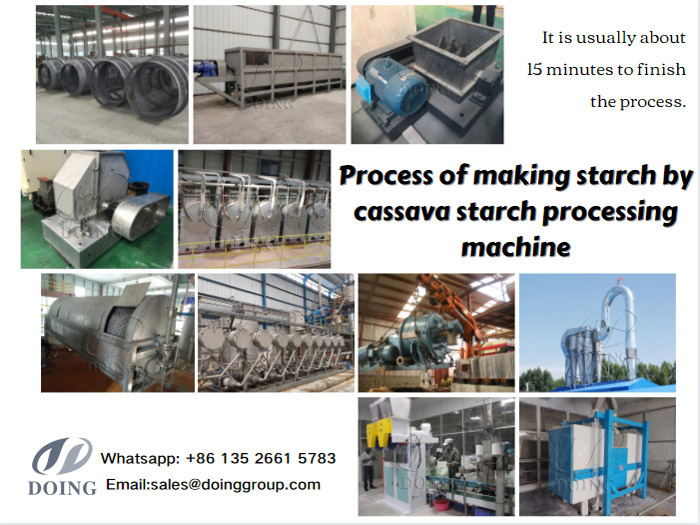 Cassava starch processing machinery
1. Small-Scale Cassava Starch Processing Plant (0.5–1 TPH)
Small cassava starch production lines are designed for startup projects and limited land conditions. With a compact and integrated layout, a 0.5–1 ton per hour cassava starch plant typically requires approximately 300–500 m² of workshop area.
The footprint usually includes:
Cassava cleaning area
Crushing and extraction section
Starch separation system
Dehydration and drying area
Basic operation and maintenance space
This configuration is suitable for investors seeking lower capital investment and faster project deployment.
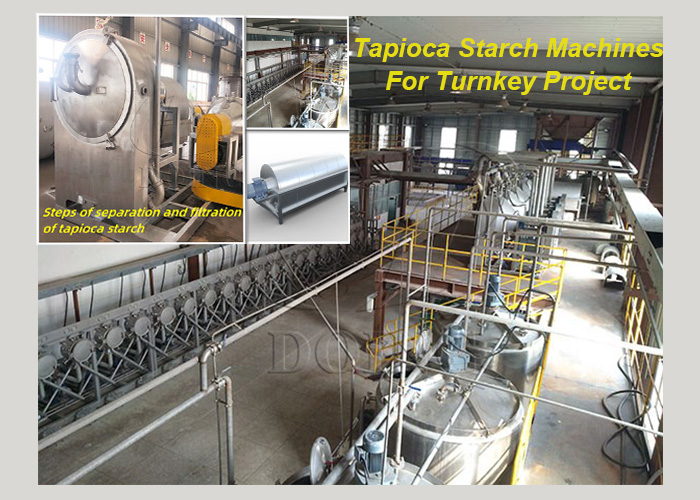 Cassava starch processing factory
2. Medium-Scale Cassava Starch Production Line (2–5 TPH)
As production capacity increases, factory layout becomes more important for maintaining stable production flow. A 2–5 TPH cassava starch production line generally requires 600–700 m² of dedicated workshop space.
In addition to processing equipment, sufficient space should be reserved for:
Raw cassava storage
Finished starch storage
Maintenance access
Material transportation routes
Operator working areas
Proper layout planning helps improve productivity and reduce daily operating costs.
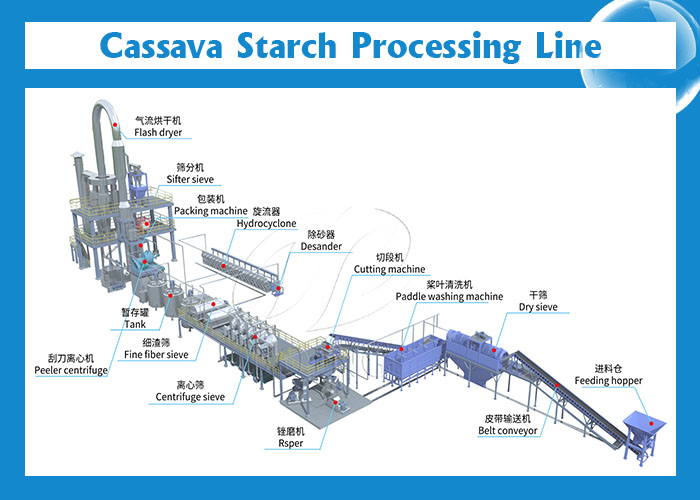 Cassava starch processing units
3. Large Industrial Cassava Starch Plant (10+ TPH)
Large-scale cassava starch processing projects require more comprehensive plant planning and supporting infrastructure. Industrial cassava starch plants with capacities above 10 tons per hour typically require more than 1,000 m².
Additional space is often needed for:
Water circulation systems
Wastewater and residue treatment
Automatic conveying systems
Utility and control rooms
For long-term development, reserving approximately 20% additional expansion space is recommended.
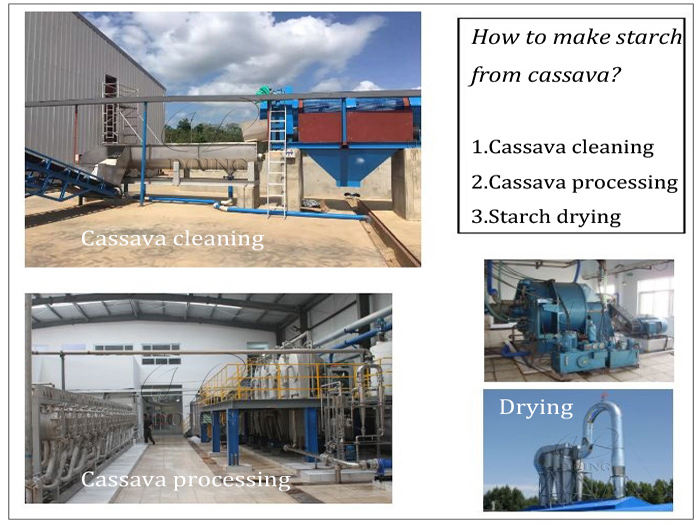 Cassava starch processing plant layout
What Factors Affect the Footprint of a Cassava Starch Plant?
The above space estimates provide a general reference for different cassava starch production capacities. However, production capacity is not the only factor that determines the required factory footprint.
In practice, the actual size of a cassava starch processing plant is also influenced by equipment configuration, process design, and future operational requirements. Key factors include:
Degree of automation
Drying technology selection
Raw material storage volume
Local labor conditions
Future production expansion plans
By considering these factors during the planning stage, investors can optimize factory layout, reduce unnecessary construction costs, and improve overall production efficiency.
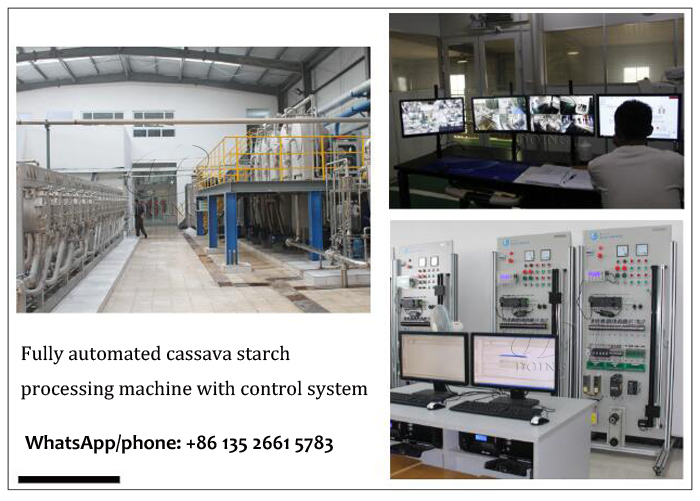 Henan Jinrui cassava starch processing plant
How to Select the Right Cassava Starch Plant Layout?
After understanding the factors that influence factory footprint, the next step is to determine a suitable plant layout for your specific production requirements. A well-planned cassava starch plant layout is not simply about reducing land use—it directly affects production efficiency, operating costs, and future expansion flexibility.
Before confirming equipment configuration, evaluate:
Daily processing capacity
Local workshop conditions
Water and utility availability
Expansion requirements
Product positioning
Based on practical project experience, Henan Jinrui helps customers customize cassava starch processing plant layouts according to production capacity, factory conditions, and project objectives to maximize space utilization and investment efficiency.
A well-planned cassava starch plant layout is essential for achieving efficient production, controlling construction costs, and ensuring long-term scalability. From small-scale to large industrial projects, selecting the right factory footprint and equipment configuration plays a key role in overall project success.
Henan Jinrui provides customized cassava starch processing plant design and layout solutions based on production capacity, factory conditions, and investment goals. Contact our team to get a tailored solution for your cassava starch project.