

Cassava Frying Machine for Garri Making: How It Works and Why It Improves Efficiency
Burnt garri? Inconsistent batches? Exhausting manual stirring? These are the three most common pain points in garri processing — and they all come down to one step: frying. As adirect manufacturerwith years of experience in garri processing equipment,Jinrui Foodtechhas helped processors of all scales upgrade from manual to automatic frying. In this guide, we explain how a cassava frying machine works, where the real efficiency gains come from, and how to choose the right machine for your specific production goals.
A garri frying machine automates the most labor-intensive step in the entire process. Instead of manually stirring cassava mash over an open fire, the machine uses three integrated systems to roast the mash evenly and efficiently.
Heating system— The frying chamber is heated by gas, diesel, or electricity. Temperature is fully adjustable, typically between 150°C and 200°C, and can be fine-tuned based on the moisture content of your cassava mash and your target garri texture. As a manufacturer,Jinrui Foodtechoffers all three heating options across our product range to match different regional energy costs.
Automatic stirring system— A built-in motor drives a stirring mechanism that continuously turns the mash throughout the cycle. This ensures every particle is evenly exposed to heat. You no longer need someone standing over the fire for hours — the machine does the work.You can also adjust the stirring speed and temperature according to the fineness of the cassava flour.
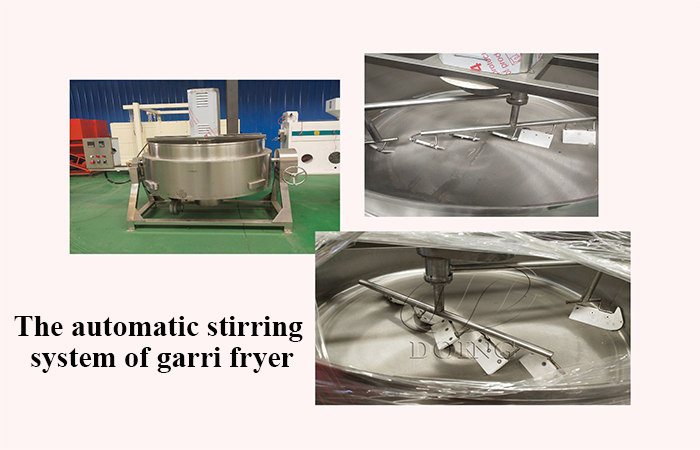 The automatic stirring system of garri fryer
Temperature control system— A thermostat monitors internal temperature and adjusts heat input automatically. This is the key to eliminating burnt or undercooked batches. Once the mash reaches the target texture and color, the operator simply discharges the roasted garri for sieving and packaging.
The efficiency gains are not just about “faster frying.” They directly impact your daily output, labor cost, product quality, and fuel expenses — four levers that determine your profitability.
Time Efficiency
Manual frying takes 1 to 1.5 hours per batch, with constant attention required. An automatic cassava frying machine typically completes a comparable batch in 10 to 20 minutes, depending on machine capacity and initial moisture content. For a processor running multiple batches per day, this can increase daily throughput by 3 to 5 times without adding labor.
Labor Efficiency
With manual frying, one person is tied to the fire for the entire duration of each batch — they cannot leave, even for a few minutes. With an automatic fryer, one operator can oversee multiple machines simultaneously, freeing up labor for sieving, packaging, or raw material preparation. For many of our customers, this is the single biggest reason to upgrade.
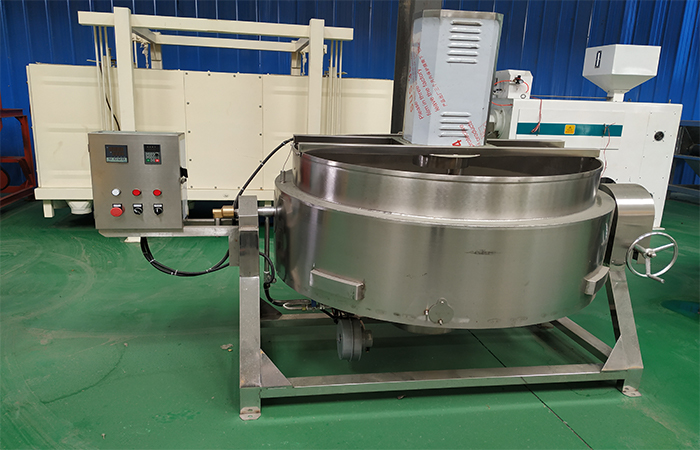 Frying machine with automatic control system
Quality Consistency
Hand-fried garri inevitably varies from batch to batch due to uneven heat, operator fatigue, and subjective judgment. An automatic fryer maintains stable temperature and stirring speed, producing garri with consistent texture, color, and moisture level. Consistent quality allows you to command better prices in the market and build long-term buyer trust.
Energy Efficiency
Traditional open-fire frying loses a large amount of heat to the surrounding air. Automatic fryers use insulated chambers with direct heating, which significantly reduces heat loss. Depending on machine design and fuel type, fuel consumption per batch can be 20–30% lower than traditional methods under comparable operating conditions.
The bottom line for your business:These four gains add up. Lower labor cost per kg, higher daily output, stable product quality, and reduced fuel waste — all of which directly improve your margin per batch.
There is no “one-size-fits-all” machine. The right choice depends on your daily output target, available energy sources, budget, and labor situation. As adirect factory,Jinrui Foodtechcustomizes solutions based on your actual production needs — not just what happens to be in stock.
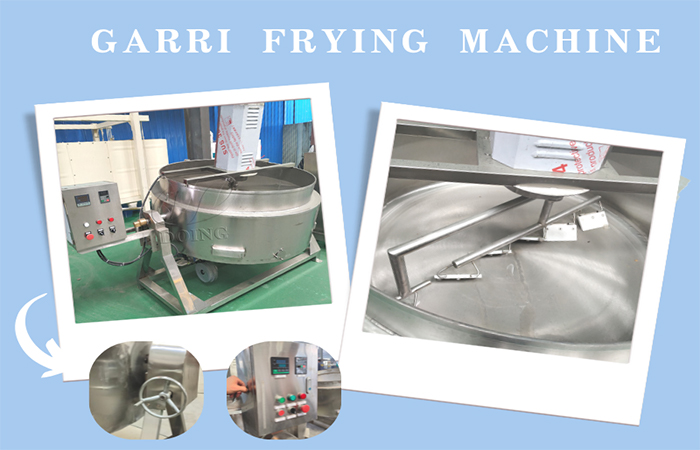 Jinrui Foodtech garri frying machine
Choose by Production Capacity
Garri frying machines are available in a wide range of sizes.Jinrui Foodtechoffers customized solutions for every scale:
| Hourly Output | Recommended Configuration | Loading/Unloading |
| 100 kg/h | Semi-automatic garri fryer | Auto stirring / temp control Optional auto discharging |
| 100–500 kg/h | Automatic garri fryer with feeding/discharging system | Auto loading and unloading |
| > 500 kg/h | Fully automatic garri production line | Fully automated (feeding → frying → discharging → sieving) |
Match the machine’s rated throughput to your daily output goal, and allow some margin if you plan to scale up. We can customize machine size and heating power to match your target capacity exactly.
Choose by Energy Source
Gas — Often the most cost-effective option where pipeline or LPG supply is stable.
Diesel — Offers flexibility in areas without gas infrastructure; fuel is widely available.
Electricity — Clean and easy to operate; ideal where electricity rates are favorable or environmental regulations restrict open-flame equipment.
All Jinrui Foodtech garri fryers are available in gas, diesel, and electric versions. We help you calculate the operating cost per batch under your local energy prices before you decide.
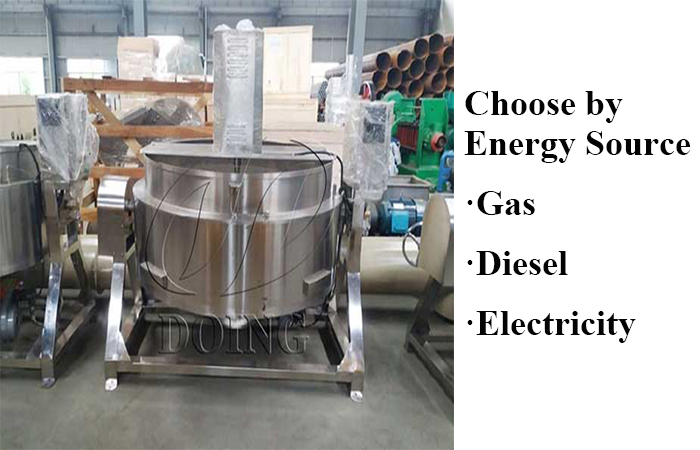 Jinrui Foodtech garri fryer energy options
Semi-automatic — Stirring and temperature control are automatic; loading and unloading are manual. Lower upfront investment, suitable for smaller operations or where labor cost is low.
Fully automatic — Adds programmable timing, automatic discharge, and sometimes integrated feeding systems. Higher automation reduces labor demand and is ideal for multi-shift operations.
We will recommend the appropriate automation level based on your budget and whether your operation runs single-shift or multi-shift.
Prioritize Material Quality
All parts that contact food must be made of 304 stainless steel. This is not optional — it is the industry standard for food safety, corrosion resistance, and ease of cleaning. Jinrui Foodtech machines use 304 stainless steel as standard across all models. Lower-grade materials may save you money upfront but will cost significantly more in maintenance and replacement over time.
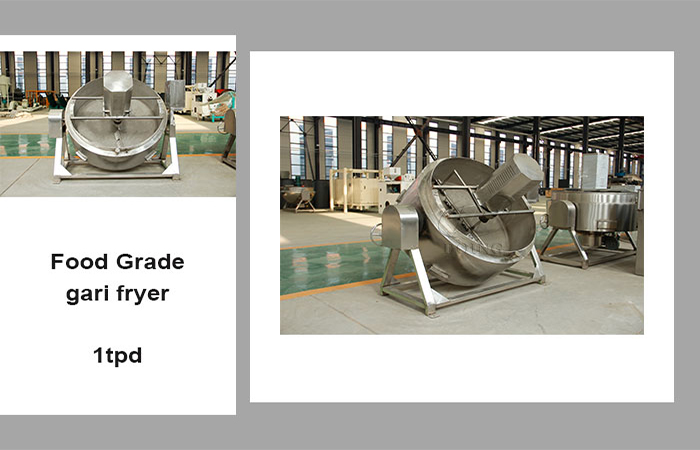 Food grade garri frying machine
Don’t Overlook After-Sales Support
When you buy from a direct manufacturer, after-sales support matters. Jinrui Foodtech provides:
Spare parts availability — Common wear parts are kept in stock for fast shipment
Technical support — Remote troubleshooting and operation guidance included with every machine
Custom engineering — Voltage, heating power, and machine dimensions can be adjusted to your local conditions and electrical standards
Export experience — We have supplied to Nigeria, Ghana, Tanzania, Cameroon, and other major garri-producing regions
FAQs About Cassava Frying Machines for Garri Making
Q1: Which energy source is the cheapest to run?
A: It varies by location. In most regions, natural gas or LPG is the most cost-effective option per unit of heat. Diesel is more expensive but offers location flexibility — it works anywhere with fuel access. Electricity is clean and low-maintenance but can be costly where electricity rates are high. At Jinrui Foodtech, we help you compare the operating cost per batch under your local energy prices before you make a decision.
Q2: Can the machine be customized for my local voltage and heating requirements?
A: Yes. As a direct manufacturer, Jinrui Foodtech customizes motor voltage (220V/380V/415V, 50Hz/60Hz), heating power, and machine dimensions to match your local electrical standards and your available production space. This is one of the key advantages of buying direct from the factory rather than through a trading company.
Q3: What is the typical payback period for upgrading to an automatic garri frying machine?
A: Most of our customers recover their investment within 6–12 months, depending on their daily output and local garri market prices. The savings come from four sources: reduced labor cost per kg, higher daily throughput, lower fuel consumption per batch, and the ability to command better prices for consistent-quality garri. Contact us with your numbers and we can help you estimate your specific payback period.