

Build a Resilient Agri-Business with Local Garri Processing Plant
In cassava-producing regions across the globe, garri has become one of the most vital staple foods and reliable sources of income. Establishing a local garri processing plant does more than just add value to cassava—it creates jobs, reduces post-harvest losses, and strengthens the resilience of local agricultural economies. For entrepreneurs, cooperatives, and agri-investors, building a modern garri processing facility is a practical and rewarding path toward a sustainable agri-business.
In this guide, Jinrui Foodtech, a professional manufacturer of cassava processing equipment, walks you through the importance of setting up a local garri processing plant and provides practical steps to help you successfully launch your own operation.
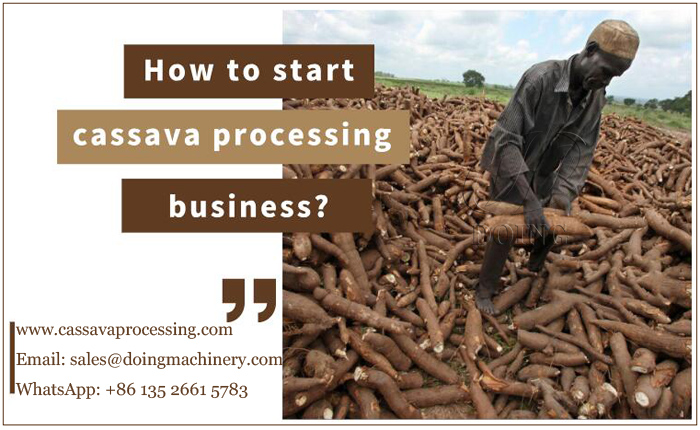 Garri processing business
Why Invest in a Local Garri Processing Plant?
A local garri processing plant tackles the rapid spoilage of fresh cassava—which can rot within 24–72 hours after harvest—by turning it into a shelf-stable, high-demand product. Beyond reducing waste, it fuels rural development: smallholder farmers gain a reliable cassava market, and the facility creates local jobs in peeling, fermentation, frying, packaging, and logistics, boosting the local economy with steady incomes.
For investors, a garri processing plant offers clear advantages:
Value Addition – Transform low-priced raw cassava into a finished product with stable demand and higher margins.
Reduced Post-Harvest Losses – Immediate processing prevents spoilage and maximizes every root.
Job Creation – Generate employment across farming, production, technical operations, and distribution, strengthening the community.
Market Expansion – Reach urban supermarkets, export markets, and institutional buyers, opening new revenue streams.
By building a local garri processing plant, you are not just starting a business—you are creating a pillar of economic resilience for your region.
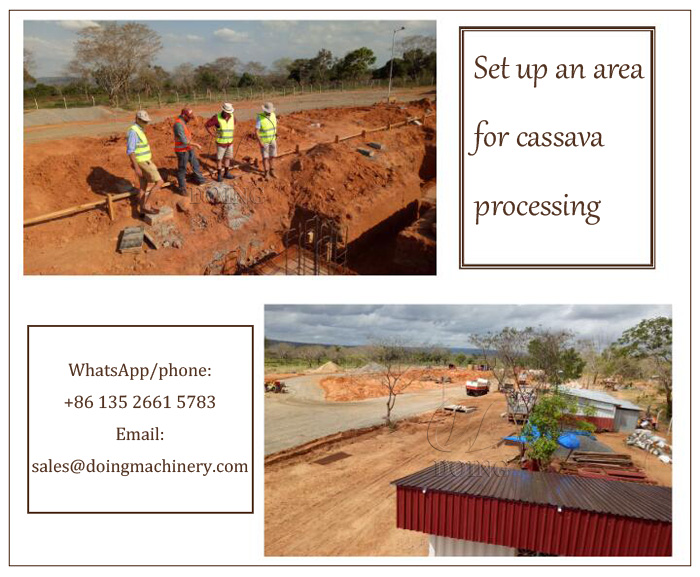 Garri processing plant
Essential Equipment for a Modern Garri Processing Plant
To run an efficient and profitable garri processing business, you need the right equipment. A modern processing line streamlines production, improves hygiene, and ensures consistent quality. Here are the key stages and the machinery involved:
1. Cassava Peeling and Washing
Fresh cassava roots must be peeled and washed to remove soil and the outer skin. Automated peeling and washing machines dramatically increase speed and hygiene compared to manual labor.
2. Cassava Grating
After cleaning, the roots are grated into a fine mash. High-capacity cassava graters deliver uniform particle size, which is essential for even garri fermentation and frying.
3. Fermentation and Dewatering
The grated mash is left to ferment, developing garri’s characteristic flavor. After fermentation, hydraulic presses remove excess water, improving the texture and preparing the mash for frying.
4. Milling and Frying
The dewatered mash is milled to break up lumps, creating uniform granules. It is then roasted in specialized garri fryers at controlled temperatures. This step transforms the mash into the final crispy, shelf-stable garri.
5. Cooling and Packaging
Once roasted, the garri is cooled and screened again if needed. It is then packaged in moisture-proof bags to preserve freshness and extend shelf life.
For each of these steps, investing in reliable, energy-efficient equipment is critical. Manufacturers like Jinrui Foodtech offer complete garri processing lines tailored to different capacities—from small community units to large industrial plants. Our machinery is designed to boost efficiency, maintain product quality, and reduce labor costs, helping you build a competitive business.
(FAQ: How Much is Garri Processing Machine in Nigeria? 2026 Price Analysis)
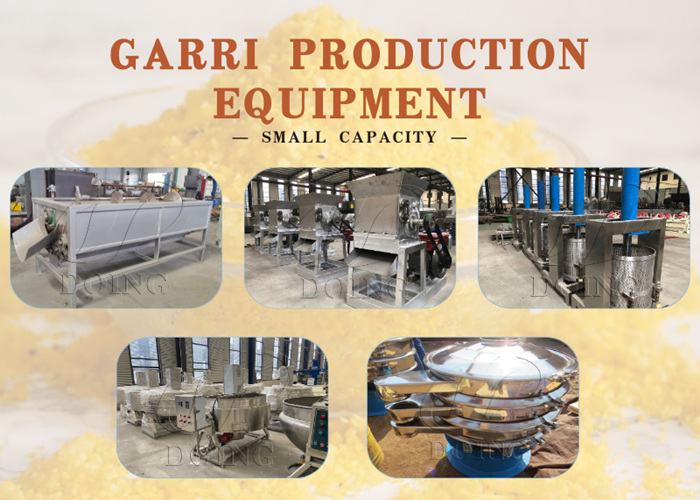 Garri processing factory
Building a Resilient and Sustainable Garri Business
A successful garri processing plant doesn’t just happen overnight—it requires careful planning and smart management. To ensure long‑term resilience and sustainability, focus on these key areas:
Stable Cassava Supply – Build strong relationships with local farmers. Offer fair prices, provide technical support, to secure a steady flow of quality raw materials.
Quality and Hygiene – Implement strict food safety standards throughout production. Train workers in hygienic handling and modern processing techniques.
Energy Efficiency – Choose equipment that minimizes energy consumption. Efficient machines lower operating costs and reduce your environmental footprint.
Market Adaptability – Monitor market demand and be ready to adjust production levels or diversify products (e.g., different garri grades, fortified garri). Flexibility helps you respond to changing consumer preferences.
Worker Training – Invest in regular training for your team. Skilled workers operate machinery more safely, maintain quality, and improve overall productivity.
By combining reliable technology with strong farmer partnerships and effective management, you can build a garri processing business that thrives year after year.
A local garri processing plant is more than just a production facility—it is a catalyst for agricultural value addition, rural employment, and long-term economic resilience. By combining reliable technology, strong farmer partnerships, and effective management, entrepreneurs can build a thriving business that benefits both producers and consumers.
With the right equipment and expertise, transforming cassava into opportunity becomes a achievable goal. Jinrui Foodtech, as a professional manufacturer of cassava processing machinery, offers the technology and support needed to help you build a profitable, sustainable garri processing operation.