

New vs Used Garri Processing Line: Which Is More Cost-Effective?
A new garri processing line is generally more cost-effective for long-term commercial production, while a used line is more affordable for businesses with limited startup capital. Used equipment costs less to purchase, but accumulated wear, maintenance requirements, and breakdown risks can increase its operating expenses over time.
To help investors make a practical purchasing decision, this article compares new and used garri processing lines in three areas: purchase price, operating costs, and long-term investment value, followed by recommendations for different production needs.
New vs Used Garri Processing Line: Purchase Price Comparison
Used garri processing equipment has a clear advantage in purchase price. Because the machines have already been operated, second-hand equipment is generally sold for less than new machinery.
| Equipment type | Reference price (USD) |
|---|---|
| Used garri processing equipment set | $3,300–$3,700 |
| New 1 TPD garri processing line | $17,100–$29,600 |
Price references: Used equipment listings on Nigerian platforms including AgroHUB and Faji; new equipment reference prices from Jinrui Foodtech (Henan Jinrui). The quoted equipment packages differ in capacity and configuration.
Price comparison: Used equipment requires less initial capital, making it attractive to small processors and businesses with limited budgets. New equipment costs more upfront, but its long-term value becomes clearer when operating expenses are considered.
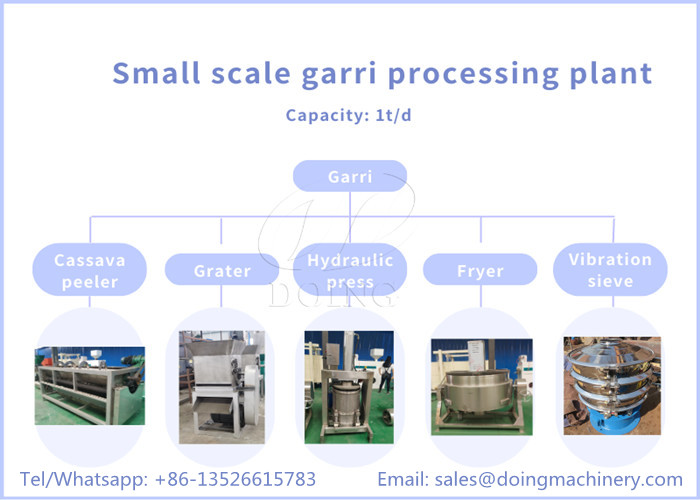 Garri processing machine
New vs Used Garri Processing Line: Operating Cost Comparison
Although used garri processing equipment is cheaper to purchase, its accumulated wear generally increases maintenance requirements and the risk of age-related breakdowns. These differences can affect production costs, especially for factories operating regularly.
| Operating factor | New processing line | Used processing line |
|---|---|---|
| Equipment wear | No previous operating wear | Existing wear on mechanical components |
| Maintenance | Mainly routine servicing during early operation | More frequent repairs and replacement parts may be needed |
| Breakdown risk | Lower exposure to age-related failures | Greater risk from worn components |
| Production stability | More dependable starting condition | More vulnerable to wear-related interruptions |
| Long-term operating burden | Generally lower during early service life | Generally higher for aging equipment |
Equipment Wear and Maintenance Costs
Garri processing machines operate under repeated mechanical stress and, in the case of frying equipment, high temperatures. Over time, this causes wear on components that directly affect machine performance and maintenance expenses.
Common maintenance concerns with used equipment include:
Cassava grinder: Worn grinding components, bearings, and drive parts may require replacement.
Hydraulic press: Aging seals and hydraulic components can increase repair needs.
Garri fryer: Heating and mixing components may deteriorate after prolonged operation.
The International Institute of Tropical Agriculture (IITA), in its guide Producing Gari from Cassava, highlights the importance of regular maintenance for processing equipment, including motorized graters and presses.
Cost impact: New equipment begins operation without accumulated wear and generally requires fewer major wear-related repairs during its early service life. Used equipment is more exposed to replacement-part and repair expenses, increasing its maintenance burden.
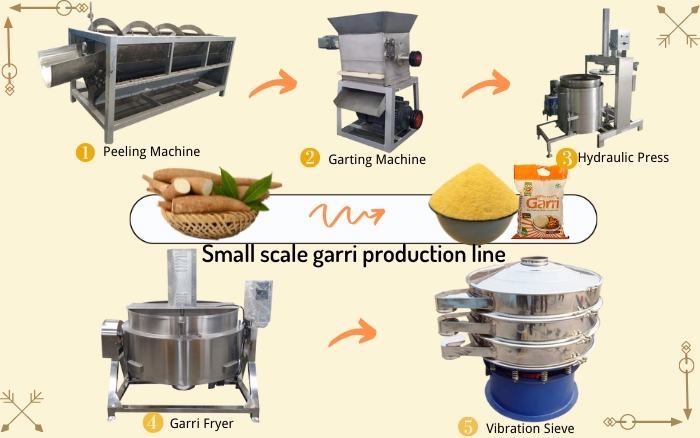 New garri processing equipment
Equipment Breakdowns and Production Downtime
In a garri processing factory, production stages are connected. When a critical machine breaks down, the problem can affect more than that individual piece of equipment.
Two examples illustrate the impact:
Hydraulic press failure: Dewatering is interrupted, delaying the material’s transfer to subsequent processing stages.
Garri fryer failure: The factory cannot complete the frying stage, preventing normal finished-garri production.
In addition to repair expenses, breakdowns reduce productive working hours and may delay customer orders. Research published in Discover Food also discusses the importance of equipment maintenance in reducing breakdowns and interruptions in garri processing.
Cost impact: Used machinery generally carries a greater risk of age-related failures. For commercial factories that depend on regular output, new equipment offers a more dependable starting point and lower exposure to downtime caused by existing wear.
Production Efficiency and Operating Expenses
Equipment condition affects production efficiency. When major components become worn, machines may require additional servicing or longer processing times to maintain the required performance.
The main differences are:
Processing performance: New equipment starts with unworn working components, while worn parts in used machines can reduce effective performance.
Production capacity: A new line can be configured with matching equipment capacities; a used equipment package may contain machines with different processing capabilities.
Labor and energy: Poor equipment condition and repeated interruptions can increase working hours and operating expenses.
Cost impact: New equipment offers a stronger foundation for efficient and consistent production. Used equipment can become more expensive to operate when wear and poor performance increase processing time or reduce output.
Overall operating cost conclusion: New garri processing lines generally offer lower exposure to wear-related maintenance expenses, breakdowns, and production interruptions. These advantages become more important as production frequency and operating hours increase.
New vs Used Garri Processing Line: Which Offers Better Long-Term Value?
The long-term value of a garri processing line depends on whether the savings made at purchase outweigh the expenses incurred during operation.
| Investment factor | New garri processing line | Used garri processing line |
|---|---|---|
| Initial investment | Higher | Lower |
| Wear-related maintenance | Generally lower in early operation | Generally higher as equipment ages |
| Breakdown-related losses | Lower exposure to existing wear | Greater exposure to age-related failures |
| Production reliability | Stronger starting condition | Depends more heavily on remaining equipment condition |
| Best investment period | Long-term commercial operation | Lower-budget or smaller-scale operation |
For small processors, the lower purchase price of used equipment can be a significant advantage. It allows businesses to begin production with less capital, particularly when production volumes are modest and the machinery remains in serviceable condition.
For commercial factories planning long-term production, the situation is different. Maintenance expenses, component replacement, and lost production time can gradually reduce the savings gained from purchasing used equipment. A new line costs more initially but offers a more dependable foundation for regular production.
Long-term value conclusion: Used equipment is more attractive for reducing startup investment, while a new garri processing line is generally the better choice for businesses prioritizing stable, long-term commercial production.
Which Should You Buy: A New or Used Garri Processing Line?
The right choice depends on the business’s investment priorities and production requirements.
| Your production needs | Recommended option | Main reason |
|---|---|---|
| Building a complete commercial garri factory | New line | Suitable for long-term, regular production |
| Operating for many years | New line | Lower exposure to accumulated wear and early repairs |
| Starting a small processing business | Used equipment | Lower initial investment |
| Working with a limited equipment budget | Used equipment | More affordable purchase price |
| Replacing one machine in an existing factory | Used equipment in good condition | Lower replacement expenditure |
Our recommendation: For investors establishing a complete commercial garri processing factory, a new production line is generally the better investment. Although used machinery is cheaper to purchase, the operating reliability and lower exposure to wear-related maintenance of new equipment make it more suitable for long-term production.
Used equipment remains a practical option for smaller businesses where reducing initial expenditure is the main priority.
Frequently Asked Questions
What should be included in a complete garri processing line quotation?
A quotation should specify the supplied equipment, production capacity, machine materials, electrical requirements, and included installation or commissioning services. These details help buyers understand the complete equipment package and avoid unexpected expenses after purchasing.
Can I expand a small garri processing line when my business grows?
Yes. A garri processing factory can be expanded by upgrading individual machines or adding equipment. However, the capacities of the grinder, press, fryer, and other processing stages should remain coordinated to prevent production bottlenecks.
Are locally fabricated garri machines compatible with imported equipment?
Yes. Locally fabricated and imported machines can be combined when their processing capacities, power requirements, and material-transfer arrangements are compatible. Equipment connections should be confirmed before installation.
What spare parts should a garri processing factory keep in stock?
Common spare parts include bearings, seals, belts, and other wear components recommended for the installed machines. Hydraulic presses may require spare hydraulic seals, while mechanical fryers may need suitable drive and mixing components.
How should I choose the right capacity for a new garri processing line?
Capacity selection should begin with the required daily output of finished garri, available fresh cassava supply, and planned working hours. The equipment should be configured to support the required production volume across all processing stages.
Choosing the Right Garri Processing Line for Your Business
Used garri processing equipment offers lower purchase costs, while new equipment provides better mechanical condition, lower exposure to wear-related repairs, and more dependable production. For small businesses with limited startup capital, used equipment can be a practical choice. For investors building a commercial factory with long-term production goals, a new line is generally the more cost-effective investment.
Jinrui Foodtech supplies new garri processing equipment and complete production-line solutions. Contact our team with your required finished-garri capacity, project location, and budget to discuss a suitable equipment configuration and obtain a quotation.