2026-06-26
If your cassava starch processing plant is struggling with low starch yield, excessive water consumption, inconsistent product quality, or failing to meet international food safety standards, a structured upgrade is no longer optional—it is essential for staying competitive and accessing premium markets. As a professional cassava starch equipment manufacturer with years of hands-on experience supplying equipment, Henan Jinrui walks you through every key step—from initial assessment to final commissioning.
Before purchasing a single new machine, you need a clear picture of where you stand. A thorough assessment covers five core areas:
| Assessment Area | What to Evaluate |
| Raw Material Handling | Washing efficiency, peeling rate, root quality acceptance |
| Starch Extraction | Rasping fineness, fiber removal rate, starch loss in pulp |
| Dewatering & Drying | Moisture content consistency, drying speed, energy consumption |
| Packaging & Storage | Hygiene conditions, moisture barrier, shelf life performance |
| Effluent Treatment | BOD/COD levels, water recycling rate, regulatory compliance |
Document current throughput (tons per day), starch recovery rate (%), water consumption (liters per ton of raw cassava), and product moisture specification. These numbers become your baseline for measuring upgrade success.
This is where most older plants lose the most money. If your current rasping equipment is worn or outdated, your starch recovery rate may be 5–10% lower than what modern systems can achieve.
Key upgrades to consider:
Upgrade to precision rasper — finer, more uniform rasping increases starch release from the cassava root cells.
Install fine fiber sieves and counter-current washing machines — remove more fiber and impurities before hydrocyclone.
Introduce desander units — removes sand and heavy grit that cause equipment wear and product contamination.
Add hydrocyclone stations — the multi-stage cyclone system refines starch from the starch milk with significantly higher efficiency than traditional settling tanks.
Expected results: Starch recovery improvement of 5–10%, reduced water consumption by 20–30%, and consistent slurry quality that meets food-grade specifications.
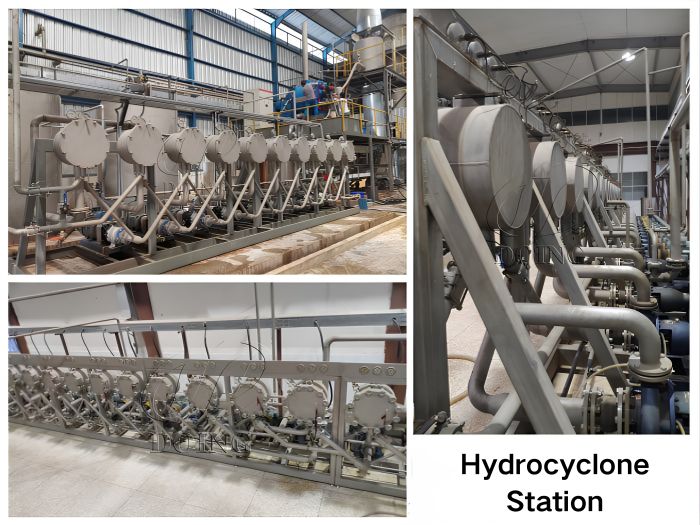 Hydrocyclone station of cassava starch
Moisture content is one of the most scrutinized quality parameters in cassava starch markets. Starch with moisture above 12% (wet basis) is prone to mold growth, clumping, and early spoilage—making it unsellable to quality-conscious buyers.
If you are still relying on sun drying or outdated rotary dryers, consider:
Flash dryers (pneumatic dryers) — controlled temperature and airflow produce uniformly dried starch with moisture below 12% wb in seconds.
Automated moisture monitoring — real-time sensors integrated into the drying line allow instant adjustments, eliminating over-drying (which wastes energy) and under-drying (which risks product rejection).
Did you know? A properly calibrated flash drying system can reduce drying energy costs by 15–25% compared to traditional methods while delivering a consistently superior product.
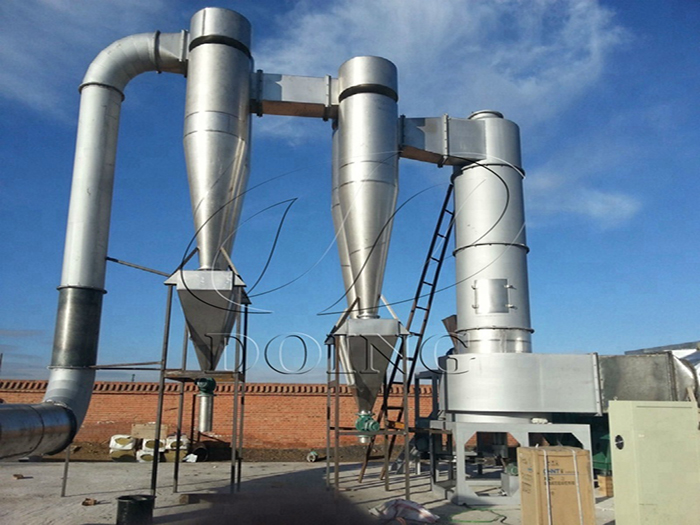 The cassava starch drying system
Manual operations are the enemy of consistency. When operators rely on visual inspection and personal experience rather than calibrated instruments, batch-to-batch quality varies—and so does your reputation with buyers.
A modern automation upgrade includes:
PLC-based centralized control system — monitors and adjusts extraction temperature, pH levels, water flow rates, and drying parameters automatically.
Automated data logging — every production parameter is recorded and timestamped, creating complete traceability documentation required for regulated markets.
Touch-screen HMI interface — operators can view real-time status, receive alerts, and make adjustments from a single screen.
Integration with quality testing equipment — in-line moisture meters, color sorters, and metal detectors ensure only conforming product reaches packaging.
For plants targeting EU, US, or Chinese GB-standard buyers, traceability documentation is not optional—it is a contract requirement. Automation makes this effortless.
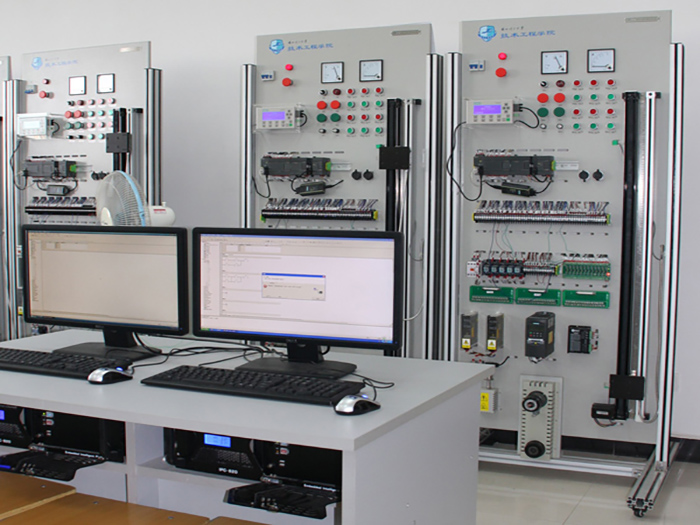 The control system for cassava starch
Environmental compliance is a growing regulatory pressure worldwide. Many countries now enforce strict BOD (Biochemical Oxygen Demand) and COD (Chemical Oxygen Demand) limits on industrial effluent discharge. Plants without adequate treatment systems risk production halts, fines, or license revocation.
Recommended effluent management upgrades:
Sedimentation basins and settling tanks — separate suspended solids from process water for reuse or safe discharge.
Anaerobic digesters — convert cassava peels and pulp waste into biogas, providing a renewable energy source for your plant.
Water recycling system — treat and recirculate process water within the plant, significantly reducing fresh water consumption and wastewater volume.
Fiber and pulp processing line — convert cassava pulp into animal feed or organic fertilizer, turning waste into an additional revenue stream.
Beyond compliance, effective byproduct utilization can generate supplementary income for your plant, improving overall profitability.
The most advanced equipment is only as good as the people operating it. In our experience, many upgrade projects underperform because operators were not adequately trained on new systems and procedures.
Build a comprehensive training program covering:
Daily startup and shutdown sequences for new equipment
Standard operating procedures (SOPs) for each processing stage
Quality testing methods: starch moisture, pH, viscosity, ash content, and whiteness
Safety protocols and emergency response procedures
Documentation requirements for regulatory compliance and buyer audits
Well-trained operators reduce equipment breakdowns, maintain consistent product quality, and require less ongoing supervision.
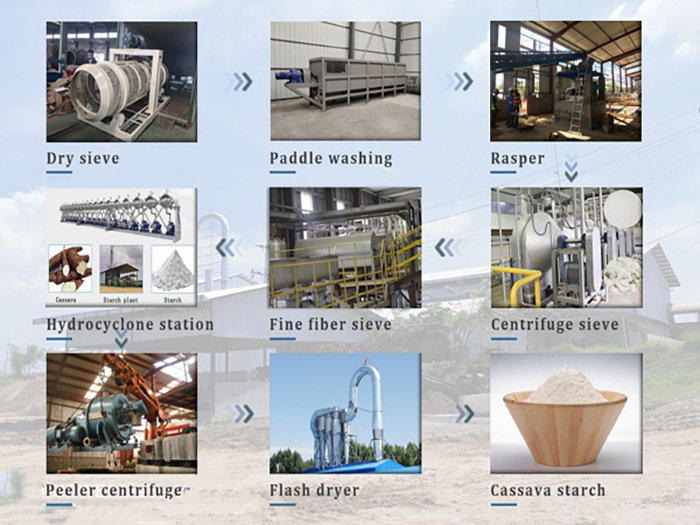 Henan Jinrui cassava starch production machine
Upgrading your cassava starch processing plant is a strategic investment in your business's future. Henan Jinrui provides end-to-end upgrade solutions. Whether you operate a small processing plant or a large industrial production line, our team can design a phased upgrade plan based on your existing plant layout, budget, and target market standards. Contact Henan Jinrui today for a feasibility assessment report.
Frequently Asked Questions (FAQ)
Q1: How much does it cost to upgrade a cassava starch processing plant?
Upgrade costs vary widely depending on the scope. A single equipment upgrade (such as replacing the drying system) may cost USD 20,000–80,000, while a comprehensive multi-section upgrade including extraction, drying, automation, and effluent treatment can range from USD 150,000 to over USD 500,000. Requesting a free gap analysis from a manufacturer helps you prioritize investments with the highest return.
Q2: How long does it take to upgrade a cassava starch processing plant?
A single equipment upgrade typically takes 2–4 months. Multiple equipment upgrades take 5–8 months. A full plant retrofit can take 8–14 months from initial assessment to final commissioning. A phased approach is recommended to minimize production downtime.
Q3: What is the ROI of upgrading a cassava starch processing plant?
Most plant owners see measurable ROI within 12–24 months through a combination of higher starch recovery (5–10%), reduced water and energy consumption (15–30%), lower maintenance costs, and access to higher-priced export markets that require certified quality.
Q4: Which countries have the strictest cassava starch quality standards?
The EU, United States, China (GB Standards), Japan, and South Korea have the most stringent requirements for food-grade cassava starch. Key requirements typically include documented traceability, microbiological limits, moisture content below 14%, and absence of contaminants.
Want to know more about our products or services? Fill out the contact form below, and we’ll to get back to you and you will get the price list. Please also feel free to contact us by email or phone.( * Denotes a required field).