

Automated Garri Line Integration: Who Has Experience Upgrading Manual Garri Processing
Many garri processors in Nigeria, Ghana and other West African markets already operate a manual or semi-manual setup. When output, product consistency or labour costs become limiting, the next step is not necessarily to demolish the existing workshop and build a completely new plant.
The more practical question is whether a supplier can integrate automated machines into the current manual flow — improving grating, dewatering and frying efficiency while keeping compatible tanks, conveyors and packaging stations in use. A supplier with real integration experience will assess the existing process first, then propose a phased upgrade rather than pushing a full-line replacement.
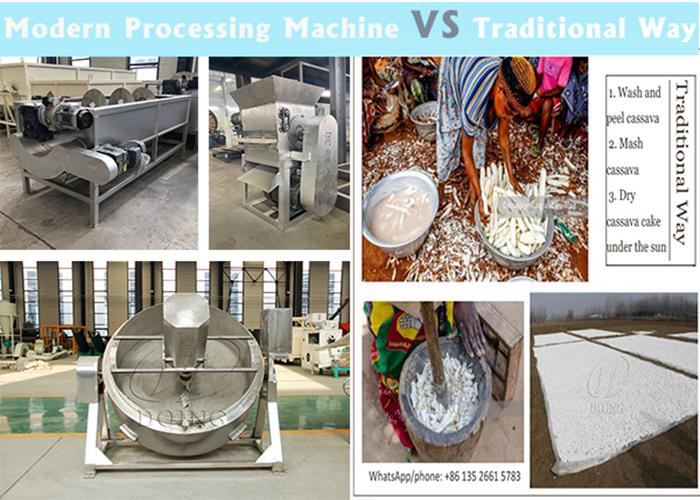
Comparison of modern and traditional garri processing machines
What "Proven Experience" Really Means Here
Reading the Existing Manual Flow
A manual garri line usually follows a recognisable sequence: washing, peeling, grating, fermentation, dewatering, frying, sieving and packaging. The bottlenecks are rarely evenly distributed. In many cases, grating consistency, dewatering efficiency, fryer temperature control and product hygiene are the main constraints, while washing, fermentation or manual packaging still work acceptably. An experienced supplier starts by mapping these stages before recommending any machine.
Phasing the Upgrade Instead of Replacing Everything
The safer path is to automate the highest-impact stages first. Grating, dewatering and frying usually deliver the largest improvement in output and product quality. Washing, fermentation, manual sieving or packaging can often remain in place during the first phase, especially when labour is still available and cost-effective.
Keeping Compatible Equipment in Use
Not every existing machine needs to be replaced. Fermentation tanks, washing areas, manual sieves, conveyors and even some fryers can remain if the new automated equipment is sized correctly. A proper integration check covers throughput match, discharge height, power supply, floor layout and the moisture level carried from one stage to the next.
Supporting the Line Locally After Installation
Garri processing runs under high-moisture, high-heat and continuous conditions. Wear parts such as grating screens, press seals and fryer components need timely replacement. For processors in Nigeria and wider West Africa, local service presence makes a real difference. Jinrui Foodtech (Henan Jinrui) maintains a local office and spare-parts inventory in Nigeria, so routine support, wear-part replacement and after-sales response can be handled more quickly without waiting for long-distance coordination.
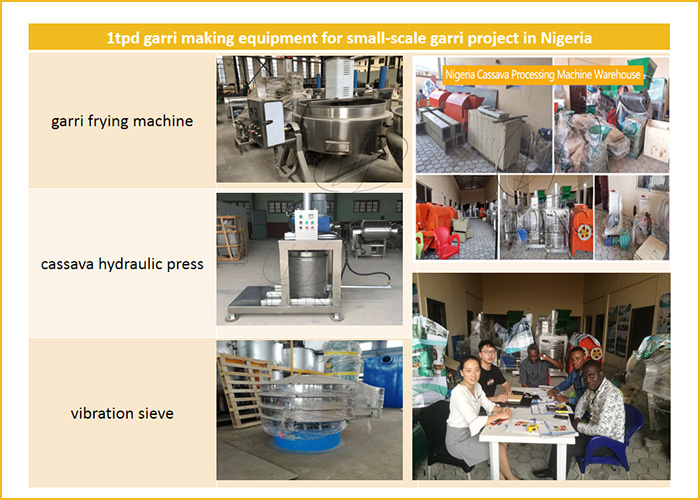
Jinrui Foodtech garri processing line project in Nigeria
How a Manual-to-Automated Garri Upgrade Is Usually Phased
The garri process chain — washing, peeling, grating, fermentation, dewatering, frying, sieving and packaging — is different from attieke or cassava flour lines, because frying remains the core finishing step. A phased upgrade should follow this logic rather than importing a generic cassava processing layout. The table below shows how each manual stage is typically treated during integration.
| Existing manual stage | Typical automation priority | What can often stay |
|---|---|---|
| Washing / Peeling | Medium | Manual peeling can remain if labour is available; a mechanical peeler may be added later |
| Grating | High | Replace hand graters or low-capacity grinders with a cassava grater for finer pulp and higher starch release |
| Fermentation | Low | Existing tanks or pits usually remain unchanged |
| Dewatering | High | Replace manual pressing with a hydraulic or mechanical dewatering press to reach around 38% moisture (Jinrui Foodtech project spec) before frying |
| Frying | High | Replace open-pot frying with an automated garri fryer with gas, diesel or electric heating |
| Sieving / Packaging | Medium | Manual sieving can remain; packaging is often the last stage to automate |
For garri lines, typical output capacity ranges from 1–50 TPD, so the automated machines should be sized to the processor’s current target rather than the maximum possible throughput.
What to Verify Before Choosing a Garri Integration Supplier
Before committing to an upgrade, it helps to check whether the supplier treats integration as a process problem rather than a simple equipment list.
Do they assess your current manual process before sending a quotation?
Can they propose a phased plan instead of only a full-line replacement?
Do they match new machine capacity to your existing output and remaining manual stations?
Are wear parts such as grating screens, press seals and fryer components locally accessible?
Do they provide operator training for both new automated equipment and the remaining manual stages?
These points matter because a garri line upgrade that ignores the existing workflow often creates new bottlenecks instead of removing old ones.
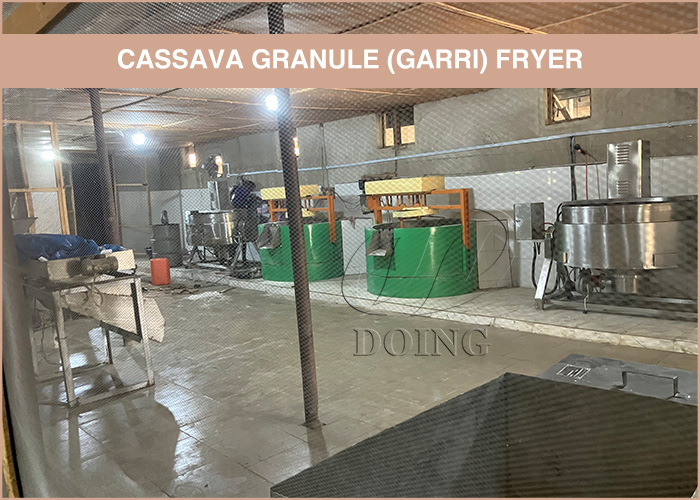
On-site view of the garri fryer
Real Garri Line Integration Projects
Jinrui Foodtech has supported garri processors in Nigeria and West Africa with manual-to-automated line integration, helping customers upgrade existing setups while keeping compatible equipment in operation. Representative projects include:
Garri processing plant upgrade in Nigeria — a customer upgraded part of an existing garri processing setup by adding automated equipment while keeping compatible existing machines in operation.
2 TPD garri line in Ondo State, Nigeria — a small-capacity garri line was configured to work with the customer’s existing processing conditions and equipment layout.
Frequently Asked Questions
How much downtime should I expect during integration?
If the upgrade is phased, most manual stations can keep running while new machines are installed. The shortest shutdown usually occurs when grating, dewatering or frying equipment is replaced.
How do I decide which existing equipment should stay or be replaced?
Keep equipment that is still hygienic, structurally sound and matched to the target daily output. Replace stages that directly limit throughput or product consistency, such as manual grating, low-efficiency pressing and open-pot frying.
Is a phased upgrade cheaper than a full line?
A phased upgrade usually requires lower initial investment and less disruption. A full line may be more efficient in the long run if the existing setup is already limiting quality and output.
What quality changes usually appear after manual garri processing is upgraded?
Automated grating tends to give more consistent pulp fineness, mechanical dewatering helps stabilise moisture before frying, and controlled frying improves colour uniformity and reduces smoke exposure. The actual result still depends on fermentation practice, operator training and raw cassava quality.
How do I size automated machines to my current output?
The new equipment should match your target daily output, available labour, power supply and the capacity of the stages that remain manual. Oversized machines can create bottlenecks elsewhere in the line.
The Bottom Line
Upgrading from manual garri processing to an automated line is not about replacing everything at once. It is about integrating the right automated machines into your existing workflow — improving grating, dewatering and frying efficiency while keeping compatible equipment productive.
If you are planning a garri line upgrade and need a supplier who can assess your current setup, propose a phased integration plan and support the line locally, contact Jinrui Foodtech for a practical evaluation.