

How to Choose a Replacement Cassava Rasper When Spare Parts Are Hard to Find
A rasper that is still running well can quietly turn into the most expensive machine on your starch line the moment a saw blade cracks or a bearing starts to growl. The rotor keeps spinning, the washed cassava keeps arriving, but the replacement blade you need is three weeks away on a slow shipment – or is no longer made at all. That is usually the day the question of whether to simply buy a new one stops being a passing thought and becomes a real decision.
The trap is to shop for a replacement the same way you shop for first equipment, comparing grinding capacity and price and calling it a day. When the reason you are replacing is that spare parts are hard to find, the new machine has to win on an entirely different scorecard: whether the parts that break are engineered to break less often, whether they are the kind of parts you can reorder easily, and whether they can be supplied close to your plant instead of waited on from across an ocean.
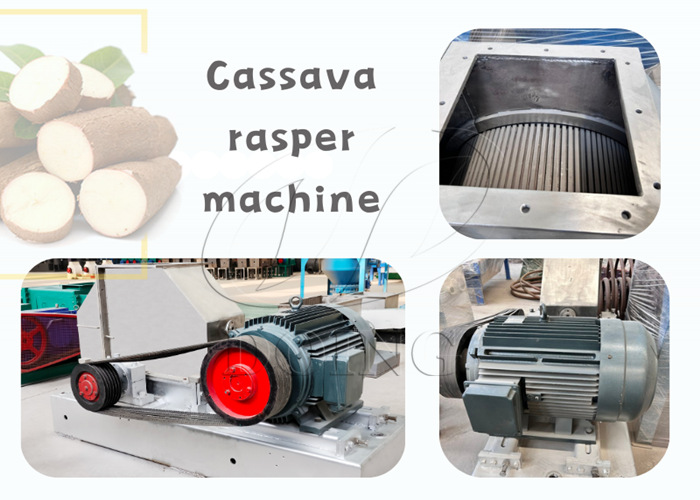 Cassava rasper machine
1. What Wears Out on a Cassava Rasper
A rasper is a simple machine, and the parts that fail are few and predictable. Once you know which three of them matter, judging a replacement stops being guesswork.
The saw blades do the rasping and wear out two ways: slowly, from abrasive cassava fibre and fine sand grinding against the teeth, and suddenly, when a piece of iron or a stone slips through ahead of the rotor and takes a chip out of the cutting edge.
The bearings carry the high-speed rotor and fail from sustained load, wet pulp working past the seals, and contamination.
The bottom screen sets your output fineness and wears slowly, but a worn or wrongly-sized screen quietly costs you product quality.
Everything else – the frame, the rotor body, the drive – should outlive many sets of blades. That is why the right question about a replacement is never whether it will grind, but how cheaply and how surely you can keep this machine fed with blades and bearings for the next five years.
2. Screening Candidates Against the Wear Parts
Take the three wear parts above and hold every candidate rasper against them. For each one, ask the same three questions: can I buy it off the shelf, how often will I need it, and does anyone besides the original builder stock it? For a well-designed rasper, the answer should read like this.
| Wear part | Standard and easy to reorder? | How often you will change it | What to watch for |
|---|---|---|---|
| Saw blades (60Mn manganese-steel) | Only as good as the blade profile – insist on a replaceable, non-proprietary blade | Highest – a true consumable, keep a running stock | A double-acting blade gives roughly twice the life of a single-face blade |
| Rotor bearings | Yes – common international sizes (e.g. SKF) | Moderate | A common bearing number is the gap between a one-day wait and a one-month wait |
| Drive belt | Yes – standard section (e.g. OPTIBELT toothed belt) | Low to moderate | Order a spare set with your first blade restock |
| Bottom screen (long anti-clog slots) | Yes – ordered by model and slot size | Low | Slot size sets your output fineness; keep one spare per grade you sell |
If a seller cannot complete that table for you, take it as a warning long before you ever look at the price: a rasper whose wear parts you cannot reorder is a rasper that will one day strand your line. So what should you actually look for instead?
3. Five Qualities of a Good Replacement Rasper
A rasper worth buying comes down to five design choices, each one shrinking the odds of a future spare-part shortage.
304 Stainless Contact Parts
Wet, mildly acidic cassava pulp eats ordinary steel alive and pits the surfaces that hold your blades true. Jinrui Foodtech (Henan Jinrui) builds the parts that touch the pulp – and the rotor surfaces the blades ride on – in 304 stainless steel, so the cutting geometry stays accurate between stops instead of drifting as the metal corrodes.
Double-Acting Blades, Twice the Life
A blade that cuts on both faces roughly doubles its working life against a single-face blade, and a quick-change slot turns a swap into a job for the shift crew rather than a weekend with a welder. Jinrui Foodtech cuts every saw blade on both faces for this reason – longer life plus faster change is the single biggest lever on your spare-part bill.
A Magnetic Separator Ahead of the Rotor
The cheapest spare part is the one you never have to replace. Jinrui Foodtech mounts a magnetic separator ahead of the rotor to pull iron out of the pulp before it ever reaches the teeth, so far fewer blades come off chipped and retire on schedule instead of in an emergency.
Off-the-Shelf Bearings and Drive Belts
Where the blade is the part you worry about, the rotor bearings and toothed drive belt should be the opposite – ordinary, off-the-shelf components (an SKF bearing number, a standard belt section) that a dozen suppliers can quote. That is the difference between a one-day wait and a one-month wait.
Spare-Part Stock Held Near Your Plant
Parts shipped across an ocean are not the parts that save a line that is down today. Jinrui Foodtech holds spare-part stock at its warehouse in Nigeria, so starch plants across Africa can restock blades, bearings and belts close to the plant instead of waiting on a container.
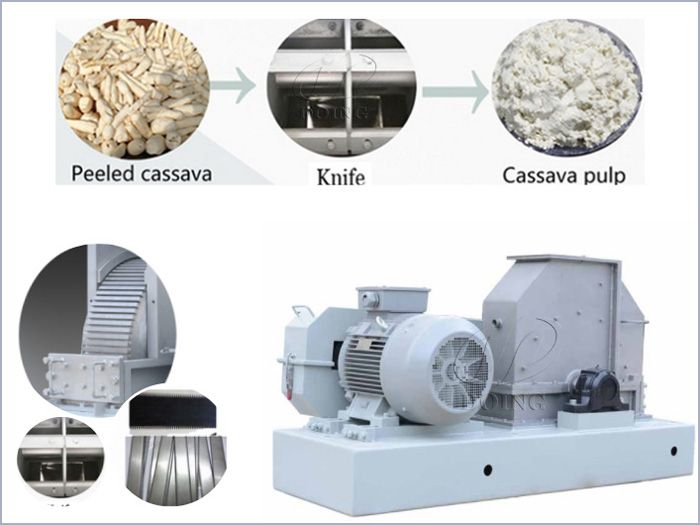 Jinrui Foodtech's cassava rasper
4. Right-Sizing the Replacement to Your Line
None of the above is worth anything on the wrong machine. A properly chosen rasper spans a fresh-cassava feed of roughly 4 to 50 t/h at a cell-rupture rate of 94 percent or better, which means a replacement can be matched to the washing and cutting throughput already on your floor without re-balancing the whole line. Treat capacity as the entry ticket, not the prize: match the rotor to the upstream flow you already run, then judge every candidate against the wear-part checklist above.
Frequently Asked Questions
What spare parts should arrive with the new rasper before I commission it?
At minimum a full extra set of saw blades, a matching set of rotor bearings, a spare toothed drive belt, and one spare bottom screen for each fineness grade you actually sell. If a supplier cannot offer a defined commissioning-spares list, that is an early sign the machine was not designed to be kept alive.
The supplier only sells the complete rotor, not individual blades. Is that a warning sign?
Yes. If blades are not individually replaceable, every blade change becomes a full rotor swap at rotor cost and rotor lead time. Insist on a machine sold with separately orderable blades, bearings and screens – the whole point of replacing is to stop being locked to one expensive, slow part.
How can I catch a failing bearing before it stops the line?
Bearings rarely fail without warning – they give you a change in sound and vibration first, then heat at the housing, then play you can feel in the rotor. A simple routine of listening and feeling the housing each shift, and keeping to the grease interval, turns a surprise mid-shift failure into a planned change made with a bearing you had already ordered.
Can I have rasper blades made by a local workshop instead of importing them?
Only if the blade is a common profile and the workshop can match the 60Mn manganese-steel grade and its hardness – copying an old, worn blade by eye usually gives you steel that chips. A proprietary blade shape cannot be reproduced without the maker drawing, which is exactly the trap you are trying to escape. The safer route is to cut your dependence instead: blades that last about twice as long, plus a supplier who stocks them near you.
Is a second-hand rasper a sensible replacement when my current one is part-starved?
Only on one condition. A used machine is worth it if – and only if – it itself uses common international bearings and individually replaceable blades; otherwise you inherit the same single-supplier lock-in on top of wear you did not cause. Before the price, check the wear parts and whether they can be re-ordered today.
The Bottom Line
A replacement rasper is not the same purchase as your first one. You are not buying grinding power – you are buying several more years of guaranteed blades and bearings at a price you can predict. Judge candidates on corrosion-resistant contact parts, doubled blade life, a demagnetising stage, common international bearings, and a supplier with stock on your continent, and the machine that once held your line hostage for want of a single part is not the one you buy next.
Talk to Jinrui Foodtech about a replacement that ends the spare-part wait. Its rasping machines are built on 304 stainless contact parts, double-acting blades and a magnetic separator, with spare-part stock held at the company warehouse in Nigeria – so the next blade change is a scheduled line on your shift sheet rather than an emergency that stops the line. Contact us today.